Orthodontic Center · Gangnam · Cheongdam · Bucheon
Adult orthodontics
Adults in their 20s and 30s may be considered for orthodontic treatment after jaw growth is complete. A precise examination of the teeth, gums and bite determines whether treatment is appropriate.
4 appliance options
Crowding, bite problems or protrusion
Growth already complete
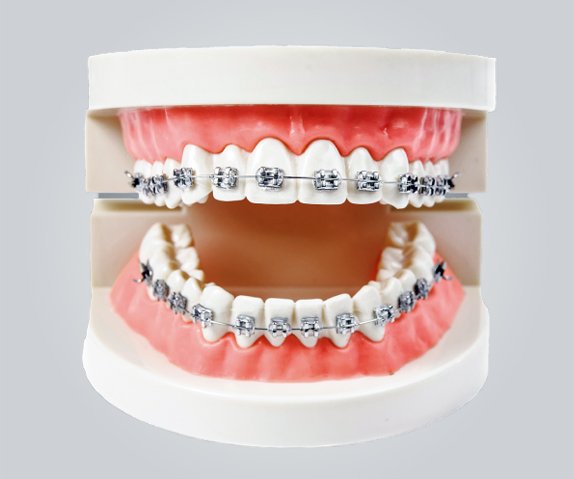
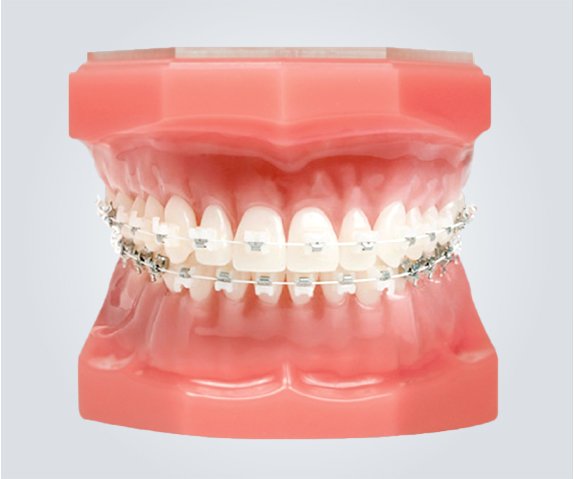
Appliance demonstration model used in the consultation room. Clinic photo.
On this page+
Adult orthodontics at a glance
Adult orthodontics addresses crowding, bite problems and protrusion after growth is complete. Suitability and the pace of treatment depend on the teeth, supporting tissues and the movements required. The clinic offers partial, clear, lingual and combination approaches; the method is selected after a full clinical and radiographic examination.
Appliance options
4
Partial, clear, lingual or combination. The right one is chosen only after a full examination.
The exam covers
4
Teeth, gums, the skeletal relationship of the jaws and overall facial balance.
Adjustment visits
every few weeks
Fixed braces normally need an in-person adjustment every several weeks.
After active movement
retention
Retention remains part of treatment after active tooth movement ends.
Which of these brought you here?
These common concerns lead to different assessment questions. Read the ones that apply to you.
Uneven front teeth
Front teeth before an interview or an event
An upcoming interview or important event may make uneven front teeth feel more noticeable. Partial braces treat selected teeth, but an examination must establish whether that limited scope meets your needs. The treatment time is planned individually and cannot be assumed from the event date.
Your upper and lower teeth do not meet properly, making it hard to chew food. The skeletal relationship of the two jaws is examined before any appliance is discussed.
Severe crowding or overlapping teeth make daily brushing and cleaning difficult. Gum health is checked first, because orthodontic planning has to take it into account.
A protruding jaw or lips affect your facial profile and you would like to discuss whether orthodontics can help. Severe crowding or skeletal discrepancies may require extraction or surgical planning.
Orthodontics normally requires in-person adjustment visits every several weeks. Some aligner-based plans may allow longer intervals, but this depends entirely on the bite, tooth movement and periodontal condition confirmed in the clinic.
Partial braces suit patients who need a tilted or over-erupted tooth repositioned before restorative work. That sequence is decided together with the restorative dentist.
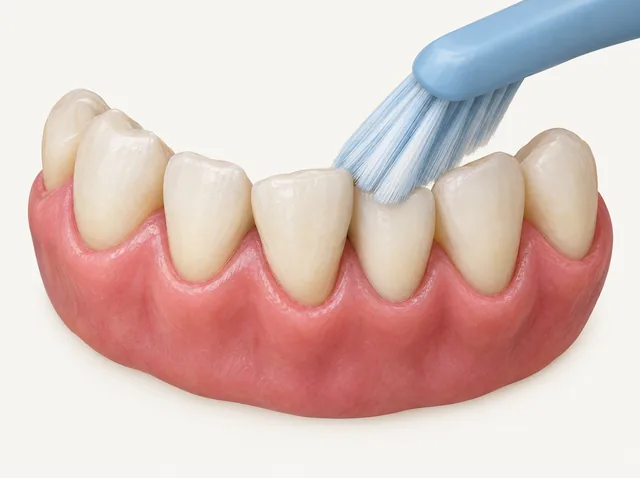
AI educational illustration. Irregular tooth positions can make cleaning access more difficult; this model illustrates the area being discussed.
Not a diagnosis. Appearance alone is not enough for an accurate orthodontic diagnosis.
How does a tooth actually move?
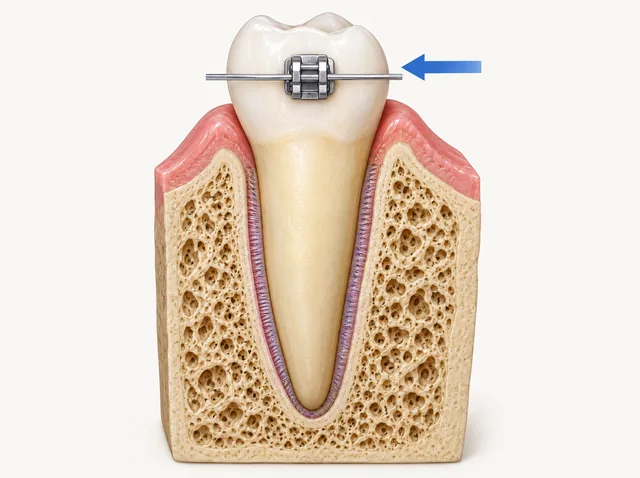
Light force, bone that remodels on both sides of the root, and time. That is why the interval between visits matters.
01
Force
The wire or the tray applies a light, continuous force. Larger force does not move a tooth faster; it changes what happens in the bone around the root.
02
Bone
Bone is resorbed on the side towards which the tooth moves, while bone forms on the other side. This remodelling takes time, and the rate varies with the individual tissues and treatment plan.
03
Time
Supporting tissues need time to respond between treatment stages. Adjustment timing and overall duration depend on the severity of the malocclusion, the method, whether extractions are needed and how the teeth respond.
AI educational illustration. The tooth root, periodontal ligament and surrounding bone are shown together. The arrow illustrates a force direction, not a predicted movement or timetable.
Partial, clear, lingual or combination?
Compare the four approaches, their appliance positions and the conditions considered before treatment.
A · Partial braces
Brackets on selected teeth only.
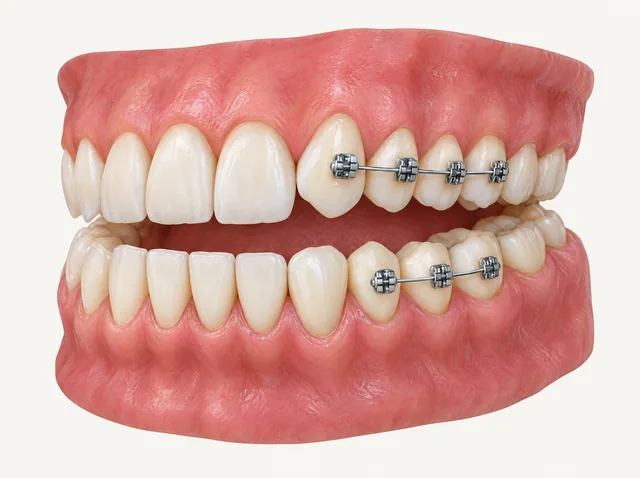
AI educational illustration. A posterior segment illustrates treatment limited to selected teeth. Which teeth can be included is decided after examination.
Brackets are placed only on selected front or back teeth. This may be considered for a limited front-tooth concern, or to reposition a tilted or over-erupted tooth before restorative work. The orthodontist checks whether this scope is appropriate; the treatment period depends on the movements required rather than simply the number of teeth treated.
B · Clear aligners
Removable transparent trays.
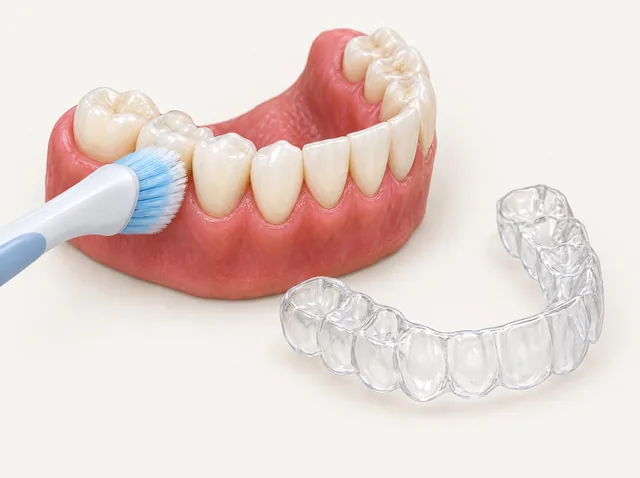
AI educational illustration. A removable aligner can be taken out for brushing. The model shows the tray separate from the teeth being cleaned.
A series of removable transparent aligners moves the teeth gradually. They are hard to notice and easy to keep clean because they come out for brushing. Clear aligners are not suitable for every case, so a detailed diagnosis determines whether you are a candidate.
C · Lingual braces
Brackets on the inner surface.
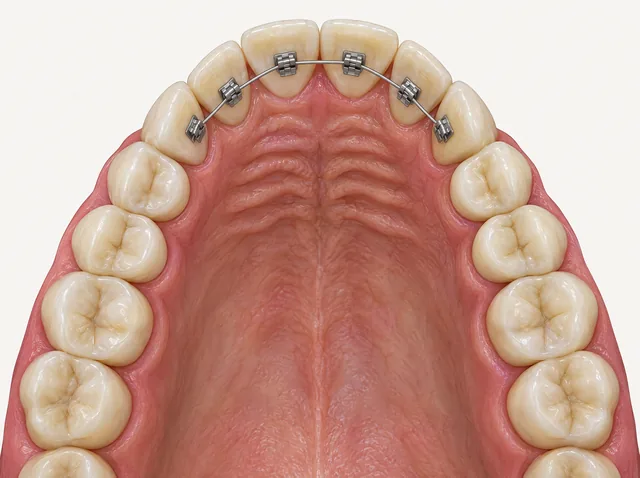
AI educational illustration. This upper-arch example shows brackets on the palatal side of the front teeth, where an inner appliance occupies space.
Brackets are bonded to the inner, tongue-side surfaces of the teeth, making them less visible from the front. Chewing and pronunciation may feel awkward initially, and adaptation can take time. This option may be considered by patients who prefer a less visible appliance for aesthetic or professional reasons, after an assessment of suitability.
D · Combination braces
Upper inner, lower outer.
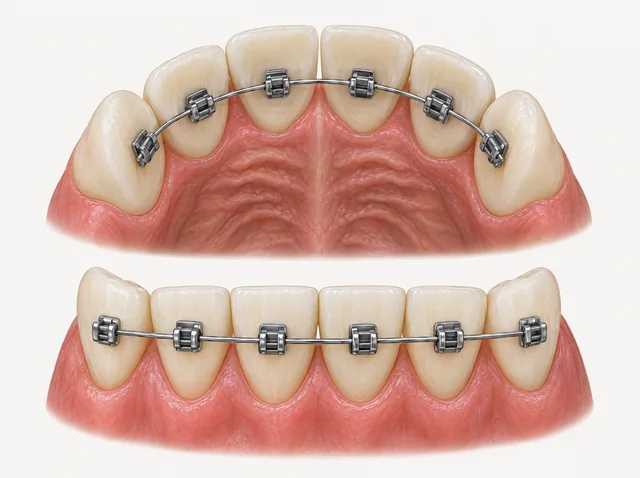
AI educational illustration. The upper and lower front segments are shown separately: upper brackets inside, lower brackets outside. This is not a real bite position or a before-and-after comparison.
Lingual brackets are used on the more visible upper teeth, with conventional outer brackets on the lower teeth. This combines different appliance positions. Cost, visibility and tongue comfort should be discussed for your specific plan rather than assumed from the combination alone.
1 of 4
Swipe or choose a method. Nothing moves automatically.
From diagnosis to retention
An example sequence. Duration depends on the malocclusion, the method and how the teeth respond.
Visit 1 · records
Precision diagnosis before choosing a method
We examine the teeth, gums and the skeletal relationship of the upper and lower jaws, and review overall facial balance before deciding which of the four approaches fits your case.
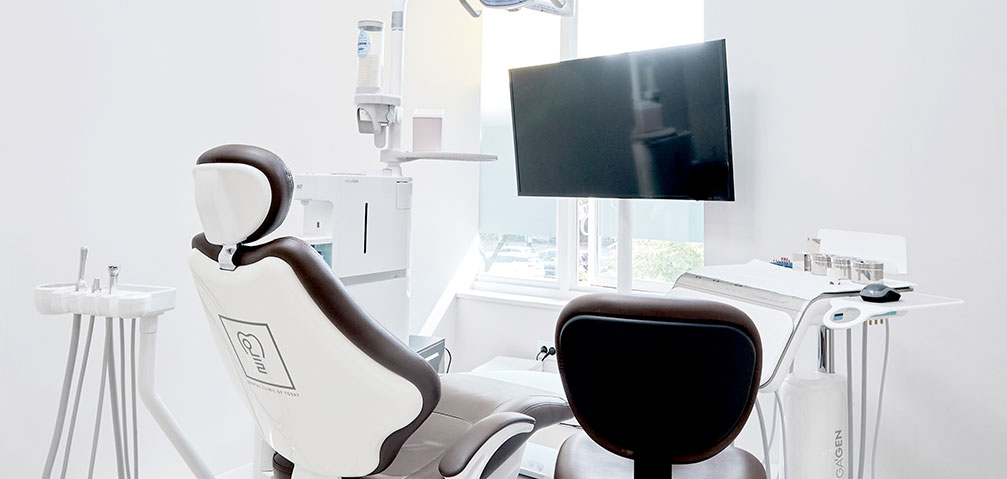
A treatment chair and screen at the clinic, where records are reviewed with you.
Visit 2 · fitting
The appliance goes on
The chosen appliance is fitted and the first wire or tray is placed. Self-ligating brackets are an option where the diagnosis supports them.
Training model fitted with ceramic brackets and an archwire
Every few weeks
Adjustment visits
Fixed braces normally need an in-person adjustment every several weeks. If you live abroad and cannot visit regularly, conventional fixed braces are usually not practical.
After removal
Retention keeps the result
Retention remains part of treatment after active tooth movement ends. The retainer type and how long it is worn are set for your case.
Living abroad
Ask about the visit interval before you start, not after the appliance is on.
Extraction or surgery
Severe crowding or skeletal discrepancies may require extraction or surgical planning.
What the diagnosis looks at, and why
Appearance alone is not enough for an accurate diagnosis. Four readings decide the method.
Teeth and their positions
Crowding, spacing, rotation and how the arches meet.
It sets how far each tooth has to travel, which is what the duration follows.
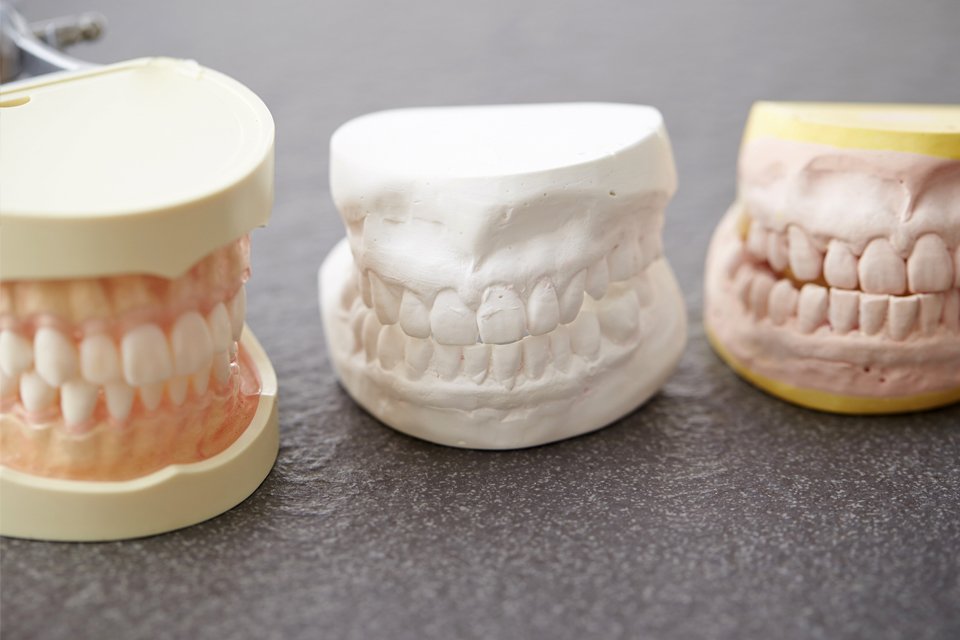
Study models are read alongside the X-rays. Clinic photo.
Gums and supporting bone
Periodontal health around every tooth that will be moved.
Orthodontic planning also takes gum health and any restorative needs into account.
Skeletal relationship
How the upper and lower jaws sit relative to each other.
Skeletal discrepancies may require extraction or surgical planning rather than braces alone.
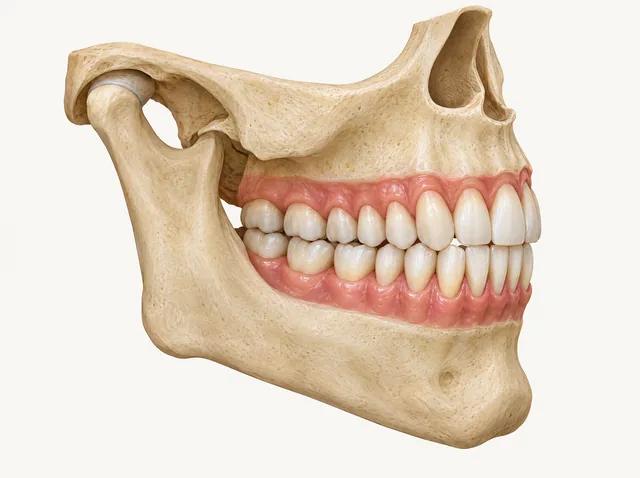
AI educational illustration. Jaw position is assessed alongside tooth position. This model explains that relationship and does not identify a diagnosis or a need for surgery.
Appliance mechanics
Whether self-ligating brackets fit the case.
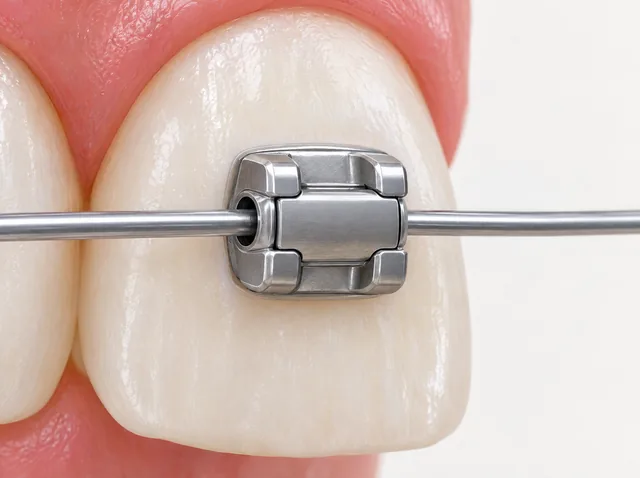
Self-ligating brackets use an integrated clip or gate to retain the wire without separate ties. The orthodontist assesses whether this design fits the planned movements and your case; the bracket type alone does not determine comfort or treatment time.
AI educational illustration. The closed gate illustrates how an integrated part can retain the wire without separate ties. It is a simplified model, not a specific product design.
Records from the clinic
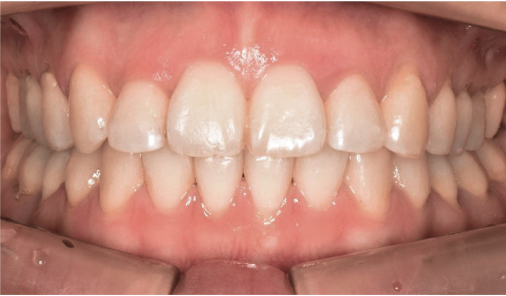
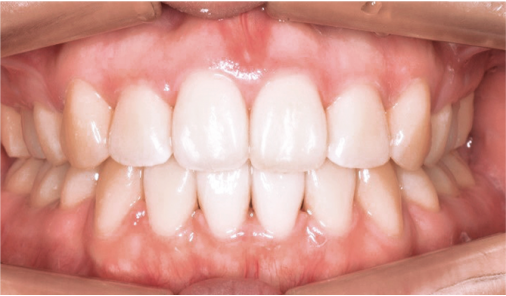
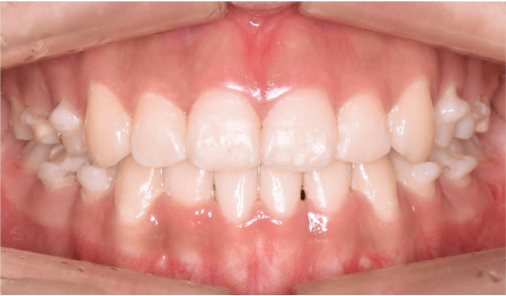
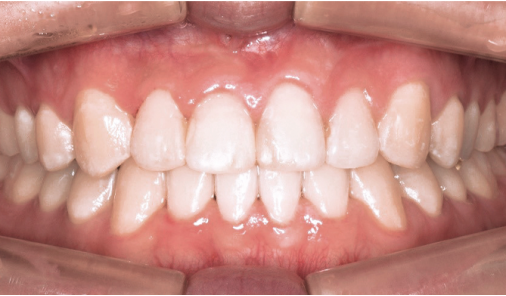
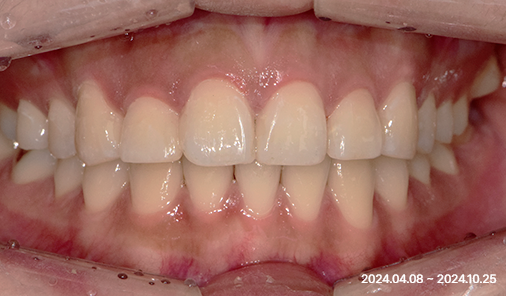
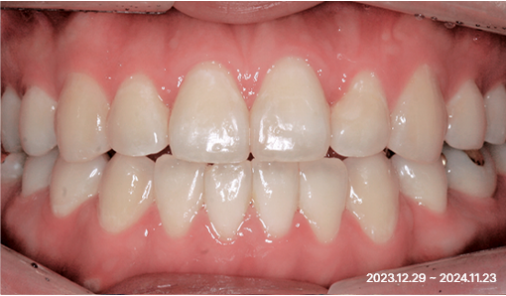
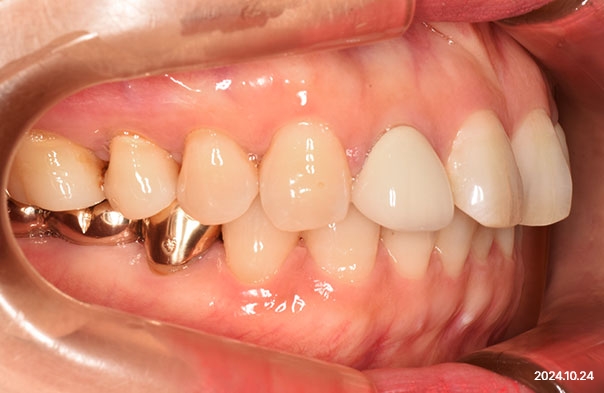
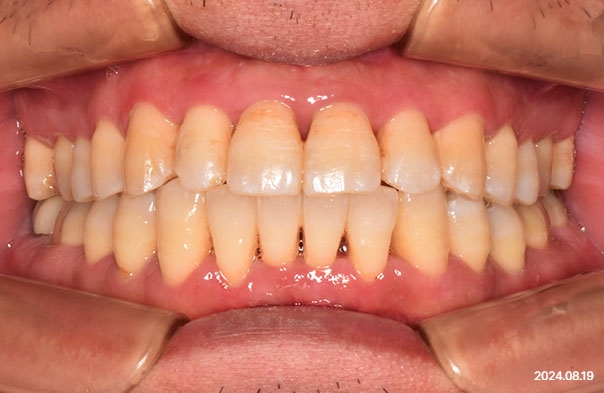
Adult orthodontic cases from the Bucheon clinic, with the recorded treatment period.
Photographs taken at the clinic, published as provided. Results vary by person, and treatment carries risks and possible side effects - see the recovery and precautions section on this page. Published with the patient's written consent for promotional use; periods as recorded.
Living with the appliance, and what can change
First days
An adaptation period is normal
With lingual braces, chewing and pronunciation may feel awkward at first.
Soft food helps while the teeth are tender after an adjustment.
Through treatment
Cleaning is part of the plan
Clear aligners come out for brushing, which makes hygiene easier.
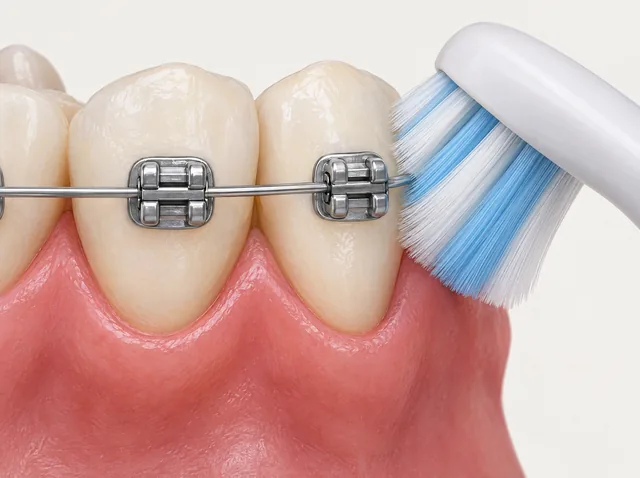
With fixed braces, cleaning around the brackets is checked at each visit.
AI educational illustration. Fixed brackets and wire remain in place during cleaning. Their surrounding tooth surfaces need attention as part of the care instructions.
After removal
Retainers are not optional
Teeth can drift back if the retainer is not worn as instructed.
The retainer type and wear time are set for your case.
What the clinic states about limits
There is no fixed answer on duration. It depends on the severity of the malocclusion, the treatment method, whether extractions are needed, and how the teeth respond. Your orthodontist gives an individual estimate after the full diagnostic work-up.
Orthodontics is a long-term treatment that normally requires in-person adjustment visits every several weeks. If you live abroad and cannot visit regularly, conventional fixed braces are usually not practical, and clear aligners are not suitable for every case.
Who plans the case, and what they confirm first
Dr. Park Je-hyuk
Orthodontics
Board-certified specialist in Orthodontics (Ministry of Health and Welfare, Korea)
Board-certified specialist in Integrated Dentistry (Ministry of Health and Welfare, Korea)
Commendation from the Minister of Health and Welfare, Korea
Member, World Federation of Orthodontists (WFO)
Clinical poster presented at the American Association of Orthodontists (AAO) annual session
Certified provider, SERAFIN clear aligners and Incognito lingual braces
The skeletal relationship of the upper and lower jaws.
Whether extraction or surgical planning belongs in the case.
How often you can realistically attend adjustment visits.
Restorative work that should come before or after the movement.
Language
English on the messaging line and at the clinic
Branch
Gangnam, Cheongdam or Bucheon, confirmed when your visit is arranged
Questions patients ask
How long does adult orthodontic treatment take?+
There is no fixed answer. Duration depends on the severity of the malocclusion, the treatment method, whether extractions are needed, and how the teeth respond. Your orthodontist will give you an individual estimate after the full diagnostic work-up.
I live overseas. Can I realistically get braces in Korea?+
Orthodontics is a long-term treatment that normally requires in-person adjustment visits every several weeks. If you live abroad and cannot visit regularly, conventional fixed braces are usually not practical. Some aligner-based plans may allow longer intervals, but this depends entirely on the bite, tooth movement and periodontal condition confirmed during an in-clinic examination.
Will I need extractions or jaw surgery?+
It depends on the degree of malocclusion. Some adult cases can be treated with braces alone, while severe crowding or skeletal discrepancies may require extraction or surgical planning. This is exactly why an accurate examination comes before any treatment decision.
Is 30-something too late to start?+
Being in your 30s does not by itself rule out orthodontic treatment. Even after jaw growth is complete, the decision depends on the condition of your teeth, gums and supporting bone, the bite and the movements required. An examination is needed to assess suitability and estimate treatment time.
Can I choose clear aligners instead of braces?+
Clear aligners are not suitable for every case, so a detailed diagnosis determines whether you are a candidate. They are hard to notice and easy to keep clean because they come out for brushing.
What happens after the braces come off?+
Retention remains part of treatment after active tooth movement ends. The retainer type and how long it is worn are set for your case, and teeth can drift back if it is not worn as instructed.
A team of specialists plans your case together
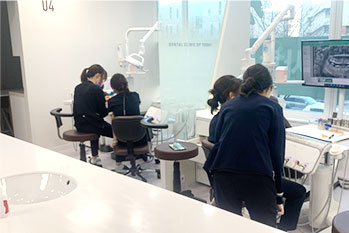
Board-certified specialists from different fields review diagnoses together, so orthodontic planning also takes gum health and any restorative needs into account.
The team working side by side at the shared clinical workstation.
Replies during clinic hours (KST). Results, cost and duration are confirmed after in-clinic diagnosis.