Fixtures
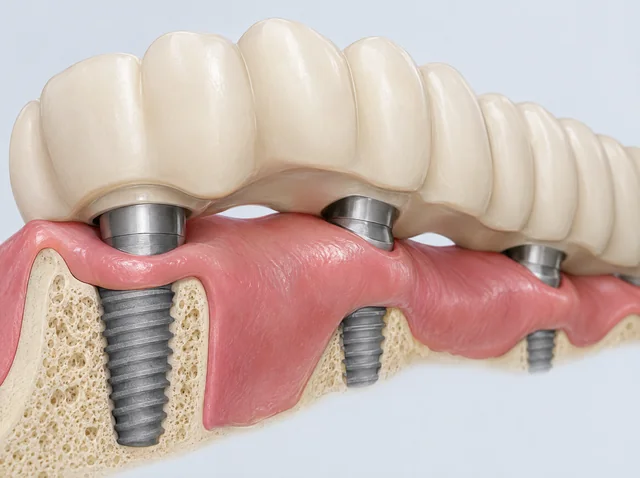
Implant positions are planned around the available bone, the final prosthesis and the bite.

Implant Center · Gangnam · Cheongdam · Bucheon
Full-mouth implants use several fixtures to support fixed replacement teeth across an arch. The plan considers your remaining teeth, jawbone, bite and facial support; the achievable result varies with your condition.
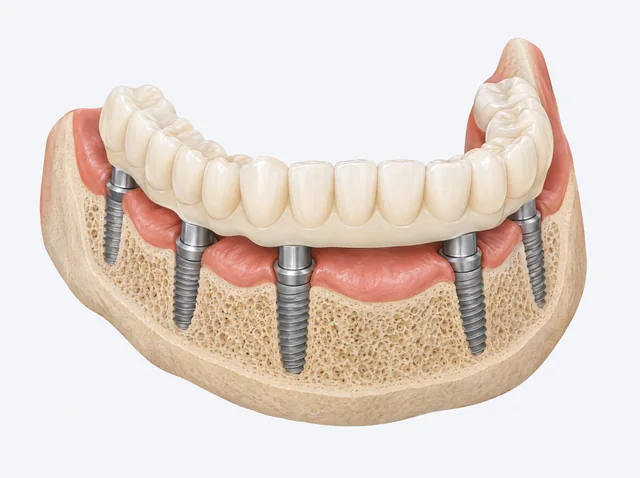
The same three parts, planned for an arch rather than one tooth.
Implant positions are planned around the available bone, the final prosthesis and the bite.
Custom abutments connect the fixtures to the prosthesis and are made for the planned implant positions.
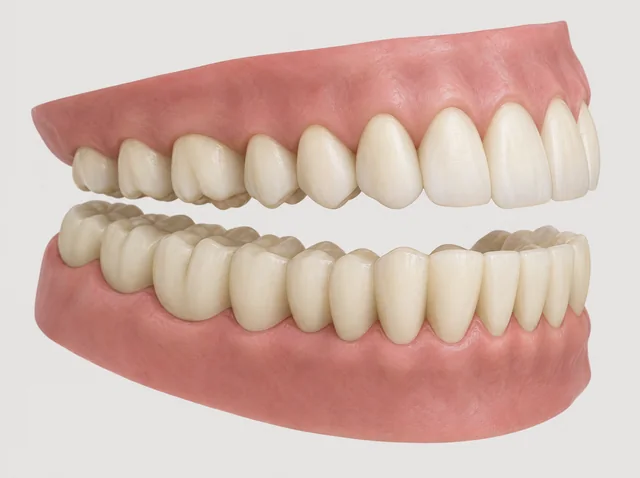
Zirconia prostheses are made to the planned shape and shade. The team checks and adjusts how the teeth meet; comfort and function depend on the individual case.
Start with your current concerns. Examination, imaging and the proposed prosthesis are assessed together.
Most teeth gone
If most teeth are missing or failing, the team assesses which remaining teeth can be maintained, the jawbone and how the teeth meet. Examination and 3D CT support an arch-wide plan for the number and positions of implants.
A denture that does not settle
If a removable denture feels uncomfortable, fixed full-arch treatment may be considered after assessment. It has different care needs: cleaning around the implants and beneath the prosthesis, with regular professional reviews.
The bite is collapsing
If you are concerned about your bite, facial support or the remaining teeth, these are assessed together. Implant positions depend on the available bone, the planned prosthesis and how the teeth meet.
Considering fixed teeth
If you prefer fixed replacement teeth, the team checks whether this design suits your condition and daily care. Custom zirconia prostheses and bite adjustments are part of the clinic's approach; function and comfort vary between patients.
Not a diagnosis. The method and the stages are confirmed only after an oral examination and 3D CT.
Fixed and removable prostheses have different cleaning needs and support designs. Bone, bite, health, personal preferences and the ability to maintain the prosthesis inform the choice. Grafting is a separate decision that may be part of either plan.
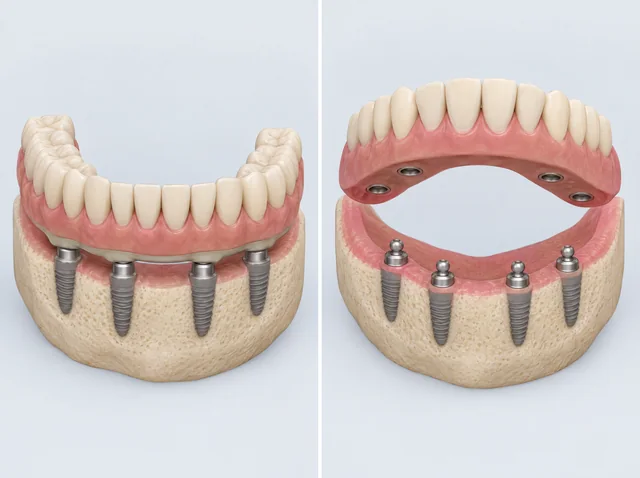
| Treatment choice | Full-mouth implantsFixed prostheses carried on multiple implant fixtures. | Implant dentureA removable prosthesis retained by implants; the number depends on the arch and design. |
|---|---|---|
| What it is | Multiple fixtures carrying fixed prostheses across the arch | A removable denture retained by implant attachments |
| Chosen when | Bone, bite and overall health support the full plan | The patient prefers a removable design and clinical assessment supports it. |
| Daily care | Clean around the implants and beneath the fixed prosthesis; attend professional reviews. | The denture is taken out for cleaning |
| Number of fixtures | Set by bone condition, bite and which teeth are missing | Depends on the jaw, bone and planned removable prosthesis. |
Four treatment stages, with timing confirmed through examination and healing reviews. Travel is arranged around the clinical plan.
Different checks answer different questions before placement, during healing and when the prosthesis is fitted.
Visit 1 · diagnosis
The team combines an oral examination and 3D CT of the jawbone with assessment of the remaining teeth, bite and proposed prosthesis. Together, these guide the number and positions of implants.
Surgery · staged
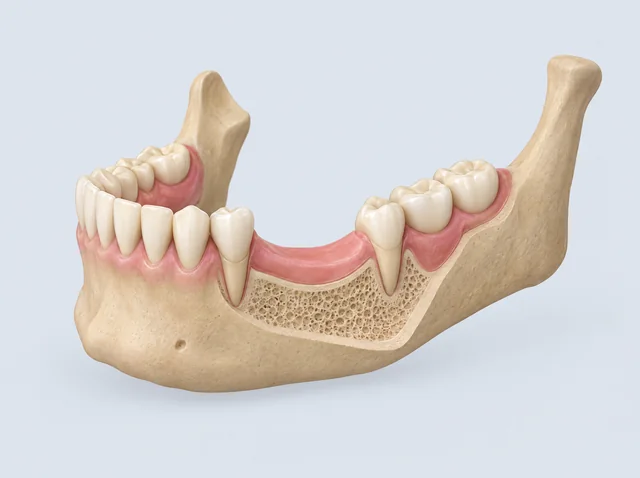
Implants are placed according to the bone, bite and prosthetic plan. Placement may proceed in stages; if bone volume is insufficient, grafting before or with placement is considered after assessment.
The available bone at the positions needed for the proposed prosthesis. Insufficient bone may require grafting before or with placement, or a revised plan.
While it heals
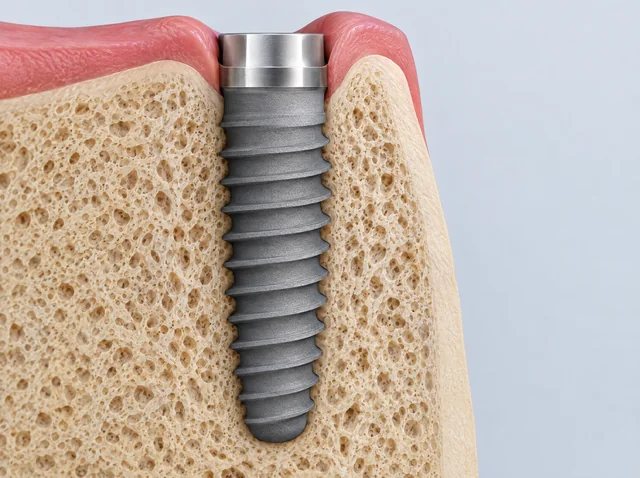
During healing, ISQ readings help assess implant stability. The clinician considers them together with healing and other clinical findings before moving to the prosthesis stage. An ISQ value alone does not determine when the prosthesis can be fitted.
Final prosthesis
Custom abutments and zirconia prostheses are made for the planned restoration. The team checks the fit and how the upper and lower teeth meet, then adjusts the bite across the arch. Comfort and chewing function are assessed individually.
The number of visits depends on the clinical stages and healing reviews. Share your travel constraints so the team can explain what can be arranged within the treatment plan.
An initial schedule is discussed after the in-clinic assessment. Bone condition, grafting needs and healing reviews may change the timing of later stages.
Cases with receded gums or jaw joint issues need an especially careful evaluation before treatment.
Underlying health conditions are also factored into the surgical plan.
The team plans the gums, bone, bite and prosthesis together. Treatment still has risks, including failure of an implant to integrate and inflammation around implants. Your clinician will explain risks relevant to your health and proposed treatment.
Clean around the implants and beneath the fixed prosthesis as instructed, and continue professional reviews. Bleeding, swelling or loosening should be assessed by the dental team; good care reduces risk but does not guarantee a complication-free result.
Up to 5 years. Check-up guidance and a warranty certificate. Conditions apply.
Panoramic X-rays recorded at the Bucheon clinic, with the treatment period as recorded.
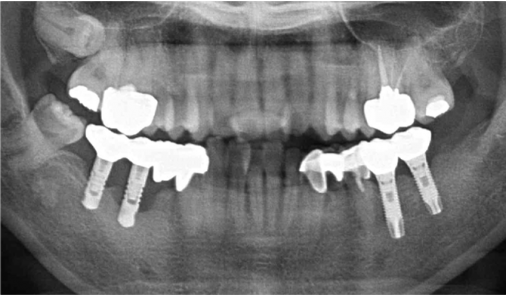
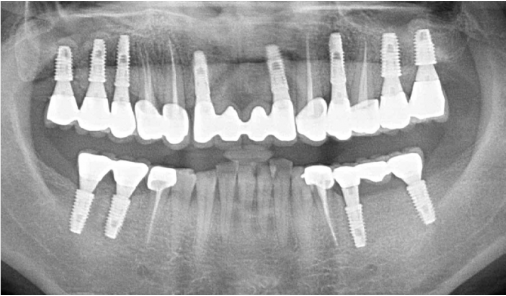
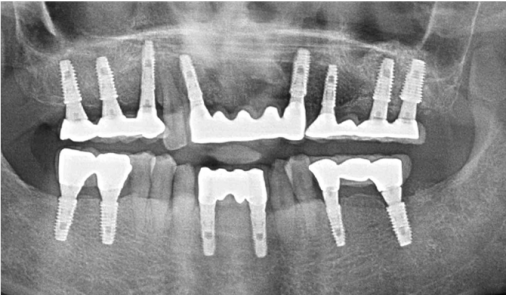
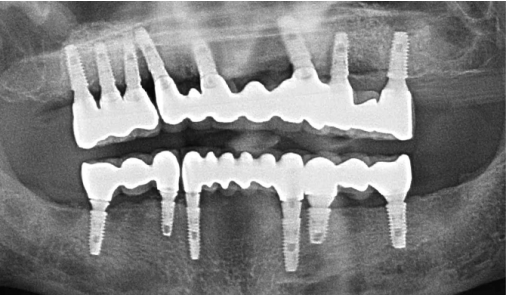
Records taken at the clinic. Individual results vary. Published with the patient's written consent; dates as recorded.
Specialists across fields plan the arch together before any fixture is placed.

Integrated Dentistry
Board-certified specialist in Integrated Dentistry (Ministry of Health and Welfare, Korea)
View full profile : Dr. Lee Jeong-baek
Periodontics
Board-certified specialist in Periodontics (Ministry of Health and Welfare, Korea)
View full profile : Dr. Song Sang-jinNot every missing tooth needs its own implant. The number depends on the planned prosthesis, jawbone, bite and condition of any remaining teeth; it is confirmed through clinical assessment.
Bone grafting may be considered before or together with implant placement. The team also reviews alternative prosthetic plans; the approach depends on the bone defect, overall health and proposed restoration.
The timeline is confirmed after examination and depends on the treatment stages and healing. Tell us your travel constraints, but the clinical sequence and review needs determine what can be arranged.
We use OSSTEM and MegaGen implant systems together with custom abutments and zirconia prostheses.
Specialists across fields plan it together rather than in pieces.
The clinic describes custom zirconia prostheses, with shape and shade planned for the individual restoration.