Treatments

Implant Center · Gangnam · Cheongdam · Bucheon

Implant Denture in Korea

An implant overdenture is a removable denture retained by implant attachments. It may improve stability compared with a conventional denture; implant number, treatment scope and suitability are planned individually.

On this page
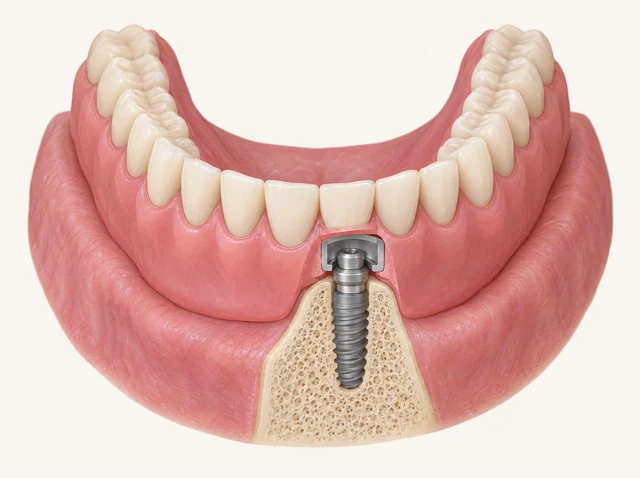
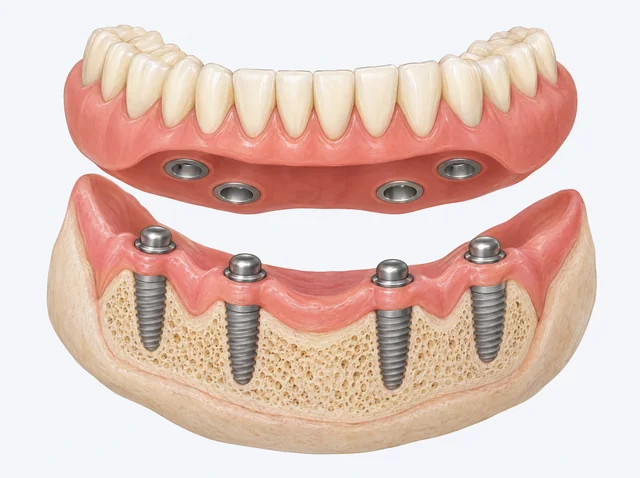
AI educational illustration of a lifted removable denture, with recessed sockets above attachment buttons; the implants remain in the jawbone below.
AI-generated educational illustration. Only the denture is shown lifted; follow your clinician’s instructions for removal and cleaning. Implant number, positions, denture and attachment design are assessed individually.

What the implants change, part by part

Implants act as anchors, and attachments connect them to a removable denture. The attachment system is selected for the denture design; it is not necessarily the same connector used for an individual crown.

Fixtures

Implant positions are planned from an oral examination, 3D CT and the prosthetic plan, rather than bone density alone.

Attachments

The attachment components are selected and fitted to connect the implants with the planned denture. The clinician reviews healing and implant stability before proceeding with the planned fitting stage.

The denture

The clinician checks how the removable denture engages the selected attachments, then adjusts fit and bite. Retention can change with use; the denture remains removable for daily cleaning.

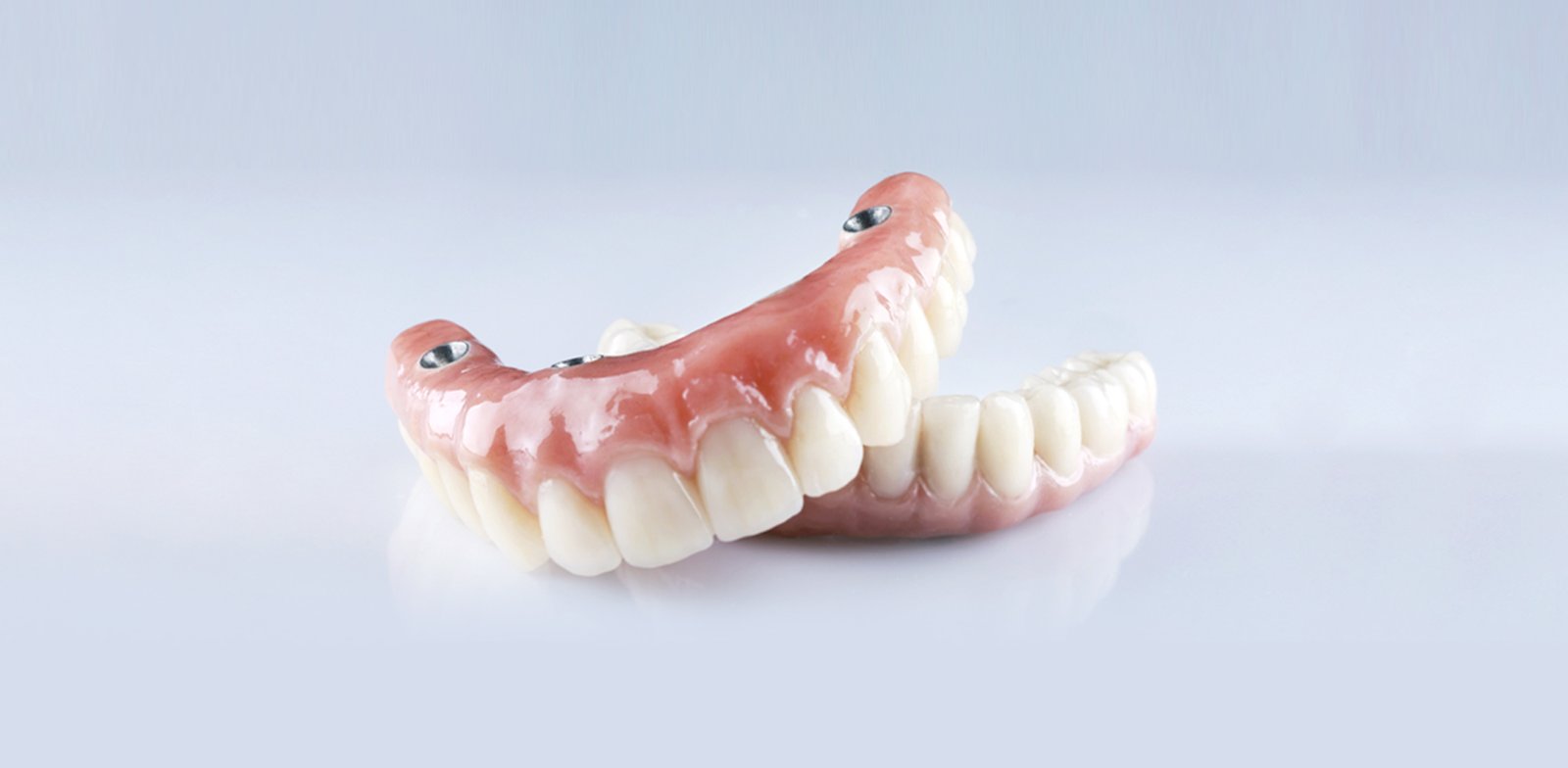
Finished implant-supported denture photographed on a light background
An implant denture, finished. Clinic photo.

Conventional denture, or implant denture?

A conventional denture relies on oral-tissue support. An implant overdenture uses implant attachments for retention; depending on its design, oral tissues may still share the support.

Conventional denture
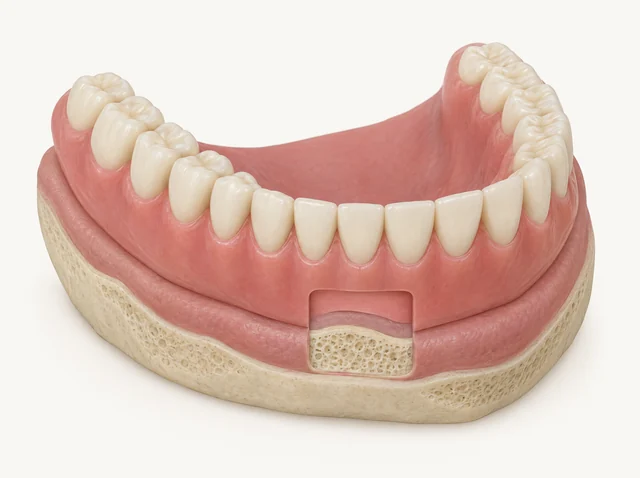
AI educational cutaway of a conventional lower denture seated against oral tissues without implant attachments.
AI educational model of a conventional lower denture contacting the oral tissues beneath it. No implants or attachments are illustrated. Fit and tissue support are assessed individually.

Supported by the oral tissues; adhesive use varies.

How it is held
Supported by the oral tissues; adhesive may be used when appropriate
Removable
Yes
Effect on the gums
Rubbing is common when it is loose
Chosen when
No implants are planned

Implant denture

AI educational cutaway of a removable lower overdenture retained by attachments while its base contacts oral tissues.
AI educational model of attachment retention in a removable overdenture. Oral tissues may also share support. The cutaway does not establish load distribution, fit, or an individual's implant number and design.

Retained by implant attachments and removable; implant number is planned individually.

How it is held
Implant attachments provide retention; oral tissues may share support depending on the design
Removable
Yes, it snaps on and off without adhesives
Effect on the gums
Retention may reduce movement, but tissue pressure and sore spots remain possible
Chosen when
When a removable implant option suits the assessed oral condition, prosthetic plan and patient needs

Is an implant denture the right middle ground?

Consider the closest situation. The choice is assessed from your oral condition and prosthetic needs, not bone health alone.

Before an implant denture is recommended, we confirm

  • Implant positions are planned from an oral examination, 3D CT and the prosthetic plan, rather than bone density alone.
  • How many implants the denture design needs.
  • Whether a fixed or removable implant option fits your assessed needs and ability to maintain it.
  • How the denture meets the opposing teeth.
  • Medical history, medications and overall health.
Considering treatment scope and cost

If the cost or scope of multiple implants concerns you, a removable implant overdenture can be discussed alongside other options. Its suitability and required implant number are assessed individually.

Assessing possible anchor sites

When bone volume is limited, the clinician assesses possible implant sites and whether grafting or another prosthetic option is needed. An overdenture does not automatically remove the need for grafting.

Improving retention and fit

Attachments can improve retention, but movement, sore spots or a change in fit can still occur. The denture and attachments may need review and adjustment.

Discussing the surgical plan

If you are concerned about surgery, discuss your health, medications and treatment options. Age alone does not determine the plan; implant overdenture suitability is assessed individually.

Not a diagnosis. The method and the stages are confirmed only after an oral examination and 3D CT.

Assessment before placement and during fitting

Planning, healing and fit are assessed at different stages. An oral examination, imaging and the prosthetic plan are considered together.

Bone and implant-site assessment

The bone and available sites in the upper or lower jaw, assessed with imaging and an oral examination.

Number of anchor sites

The clinic overview describes 2–4 implants. This is not a universal count for every arch: the upper or lower jaw, bone and oral tissues, prosthesis design and clinical examination determine the individual plan.

The upper or lower jaw, implant positions, oral tissues and denture design all contribute to the planned number.

Integration with the jawbone

Whether the implants have bonded firmly enough to carry a denture.

The connectors are fabricated only once the implants integrate.

Fit and bite

How the denture seats on the attachments and meets the opposing teeth.

Visit by visit: what happens when

Three stages. The middle one waits for the implants to bond.

  1. Surgery

    Implant placement according to the individual plan

    The clinician places the implants at positions established through examination, 3D CT and prosthetic planning. Their number and distribution follow the individual treatment plan.

  2. After integration

    Preparing the attachment components

    After healing and implant stability are reviewed, the planned attachment components are prepared and fitted for the denture.

  3. Fitting

    Fitting the removable denture

    The clinician checks how the removable denture engages the selected attachments, then adjusts fit and bite. Retention can change with use; the denture remains removable for daily cleaning.

How many implants?

The clinic overview describes 2–4 implants. This is not a universal count for every arch: the upper or lower jaw, bone and oral tissues, prosthesis design and clinical examination determine the individual plan.

Book flights after the plan

The initial implant and prosthetic plan is discussed after an oral examination and 3D CT. Travel and later visits are arranged around that plan and may change as healing is reviewed.

Recovery, precautions and safety

Daily use

It comes out for cleaning

The button-type design described by the clinic allows the denture to be removed for cleaning. Follow the clinician’s instructions for taking it out and seating it again.

Remove and clean the denture daily as instructed, and clean around the implants and attachments. Attend planned reviews; cleaning and check-ups support care but do not guarantee that complications will not occur.

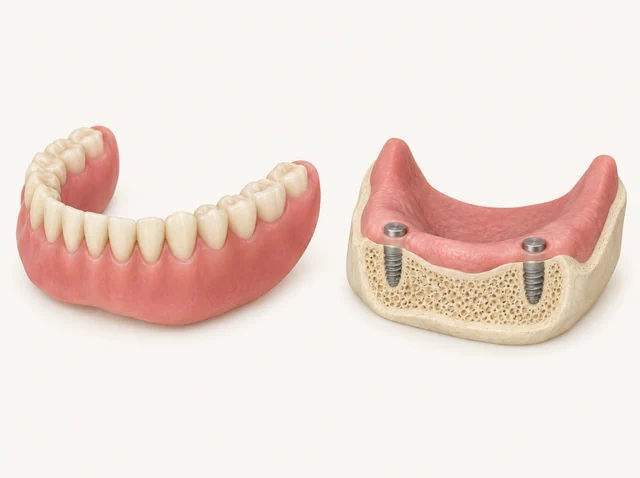
AI educational illustration of a removed denture beside the oral model with its implants and attachments remaining in place.
AI educational illustration of two care targets: the removable denture and the implants and attachments remaining in the mouth. It does not demonstrate a removal or cleaning technique. Follow your clinician's instructions.

While the implants bond

The connectors wait for integration

The clinician reviews healing and implant stability before proceeding with the planned attachment fitting.

Fit and bite are checked during fitting and may need later adjustment.

Long term

Check-ups stay part of it

Follow-up reviews check implant and gum health, attachment wear, retention, fit and bite. Worn components, reduced retention or changes in fit may require maintenance; report soreness or loosening rather than trying to tighten components yourself.

Quality care and check-up guidance are provided for up to five years, with conditions confirmed during your visit.

Care and possible complications

Treatment requires implant surgery and ongoing care. Implant or tissue complications can occur, and attachments may wear or lose retention. The team will discuss risks and maintenance needs for the planned design.

Attachments can improve retention, but movement, sore spots or a change in fit can still occur. The denture and attachments may need review and adjustment.

Quality care programme: Up to 5 years. Check-up guidance and a warranty certificate. Conditions apply.

Records from the clinic

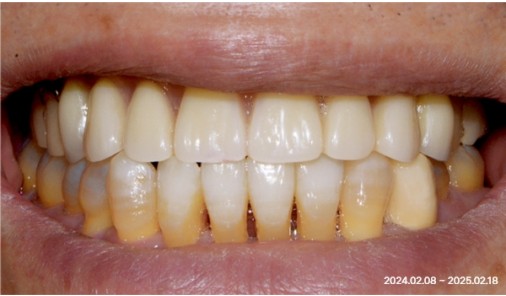
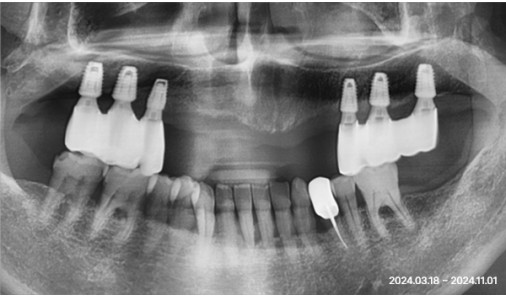
Records taken after implant denture treatment at the Bucheon clinic.

Independent clinic record 01

Frontal photograph of the restored teeth recorded after implant denture treatment at the Bucheon clinic
Clinic intraoral record.

Many missing teethImplant dentureBucheon clinic

Independent clinic record 02

Panoramic X-ray recorded after implant denture treatment at the Bucheon clinic
Clinic radiographic record.

Anchors in the lower jawImplant dentureBucheon clinic

Records taken at the clinic. Individual results vary. Published with the patient's written consent; dates as recorded.

Who fits it, and what they check first

Language
English on the messaging line and at the clinic
Branch
Gangnam, Cheongdam or Bucheon, confirmed when your visit is arranged

Questions patients ask

How is an implant denture different from a conventional denture?

A conventional denture relies on oral-tissue support. An implant overdenture uses implant attachments for retention; depending on its design, oral tissues may still share the support.

How many implants are needed for an implant denture?

The clinic overview describes 2–4 implants. This is not a universal count for every arch: the upper or lower jaw, bone and oral tissues, prosthesis design and clinical examination determine the individual plan.

Can I remove and clean the implant denture myself?

Yes. Follow the clinician's instructions for removing and reseating the denture. Clean it daily and clean around the implants and attachments; continue the planned professional reviews.

Would individual implants be better for me?

Fixed and removable implant options are considered individually, including bone and oral tissues, prosthesis design, cleaning ability, comfort needs and cost. Healthy bone alone does not establish which option is better for gum health.

Can an implant denture still cause sore spots?

Yes. Implant attachments may reduce movement, but oral tissues may still share support. Pressure, rubbing or soreness can occur and should be checked; fit or bite may need adjustment.

How is the removable denture retained?

The clinic describes a button-type attachment system that connects the removable denture to the implants. The team checks retention and fit and shows you how to remove and reseat it.

On this page

Implant Denture in Korea

Contact the clinic