All treatments

Orthodontic Center · Gangnam · Cheongdam · Bucheon

Children’s orthodontics

A baby tooth and its permanent successor
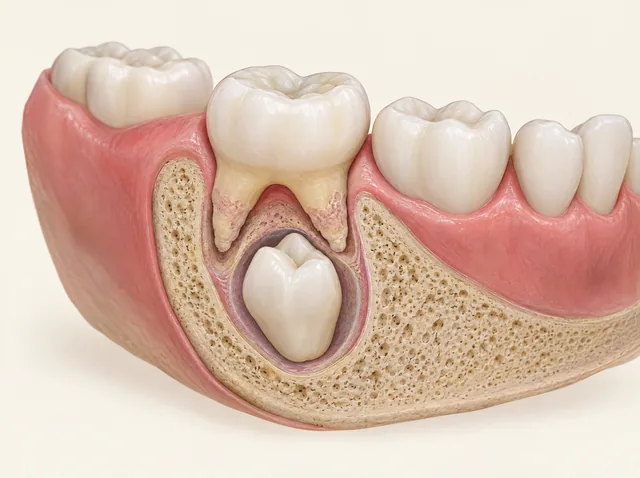
AI educational section of a lower primary molar with shortened roots above a developing permanent premolar in a separate space.
AI educational illustration. A permanent premolar develops beneath a primary molar as the primary roots resorb. This is one simplified stage, not an age or treatment timetable.

In growing children, tooth eruption, bite and jaw development are assessed together. Some problems may benefit from treatment during growth, while others are monitored before a decision is made. This care needs regular in-person visits over an extended period, so it suits families living in Korea or staying long term.

  • 3 appliance options explained
  • 3 stages, assessment to follow-up

Children's orthodontics at a glance

Children's orthodontics assesses developing concerns such as crossbites, crowding after early baby-tooth loss and jaw relationships. The clinician considers the child's growth and eruption stage before recommending treatment or continued observation. Headgear, face masks and activators are different options selected for specific needs, not a sequence every child follows.

Growth-stage appliances

Headgear, face mask, activator. Which one depends on the direction of growth.

Best suited to

Families based in Korea or staying long term. Not a short medical-travel treatment.

Treatment window

Timing depends on tooth eruption, the bite and the child’s growth stage. Assessment may lead to treatment or continued observation.

What it does not promise

That braces will never be needed later. Some children still need a second phase.

Concerns this page answers

These are the reasons parents most often bring a child in. An examination decides whether to treat now, monitor, or wait.

Crowding

Baby teeth were lost early

Cavities took the baby teeth early and the permanent teeth are coming in crooked.

Space after early baby-tooth loss
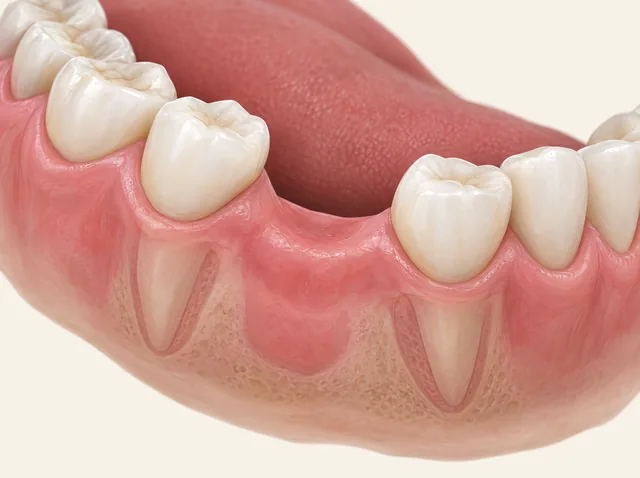
AI educational dental segment with a healed missing-tooth space and adjacent teeth leaning toward it.
AI educational illustration. Neighboring teeth can move toward the space left after early baby-tooth loss. An examination assesses the space and developing teeth.

Lower jaw

The lower face looks more prominent

If the lower face appears more prominent as your child grows, an examination can assess the bite and the relationship between the upper and lower jaws. Appearance alone does not determine the growth pattern or the treatment needed.

Gums

The front teeth hit each other

The upper and lower front teeth collide and the gums are starting to recede.

When front tooth edges meet
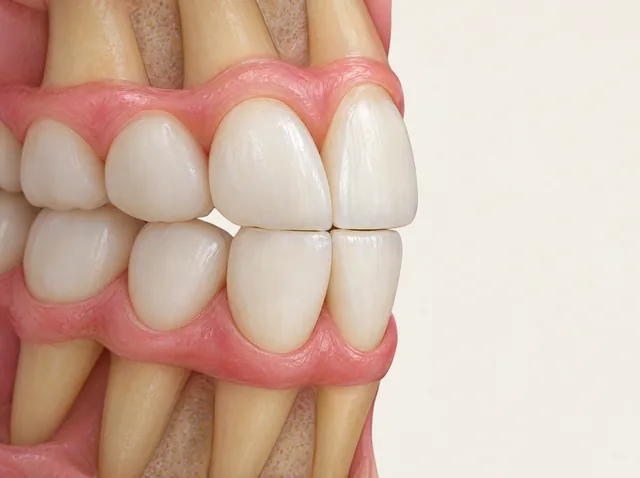
AI educational side-oblique view of a few upper and lower front teeth meeting edge to edge, with gums shown without damage.
AI educational illustration. The edges of upper and lower front teeth meet in this example. It shows the contact relationship, not gum damage or an individual diagnosis.

Final treatment plan, cost and duration are confirmed after in-clinic diagnosis.

Assessment, a tailored plan and follow-up

Three parts of care, with timing guided by each child's development. Assessment may lead to treatment or continued observation.

Step 1

Assess growth, eruption and the bite

The clinician examines tooth eruption, tooth positions, the bite and jaw development. These findings inform whether treatment or observation is appropriate.

Assessing the bite and jaw relationship
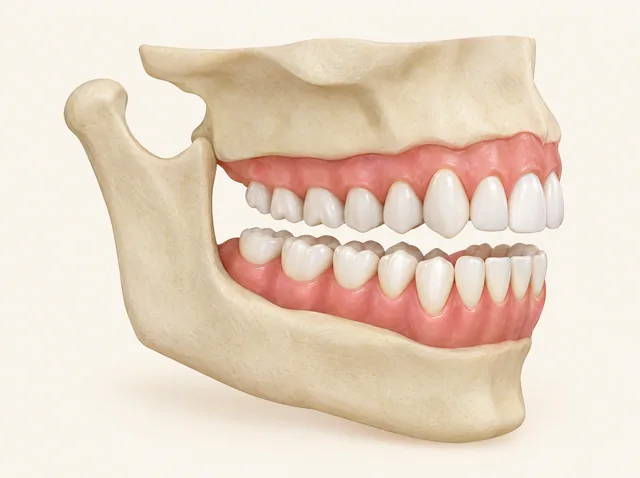
AI educational oblique view of upper and lower jaws with erupted teeth and gums; no tooth roots or developing tooth buds are shown.
AI educational illustration. A simplified model shows the upper and lower jaws and erupted teeth together. It explains what is assessed, not a growth stage, diagnosis or treatment timetable.

Treatment when appropriate

Growth

Some developing bite problems may benefit from treatment during growth. The appliance and timing are chosen after assessing the child's bite and growth pattern.

Continued observation

Timing

An assessment does not always mean treatment starts immediately. Some children are monitored with regular reviews until treatment is appropriate.

Step 2

Choose the timing and an individual plan

If treatment is appropriate, the clinician discusses the appliance and timing for the child's bite and growth pattern. An assessment does not mean every child starts treatment immediately.

Step 3

Review progress as the child grows

Regular reviews check growth, tooth eruption and treatment progress where treatment has started. Dental concerns are assessed along the way, and the plan is reviewed as the child develops.

Teeth, growth and treatment timing

Planning considers tooth positions and jaw development. The clinician assesses whether treatment or observation is appropriate while growth continues.

Teeth

An appliance can apply controlled forces to move teeth. This illustration explains tooth movement; it does not show how an appliance guides jaw growth.
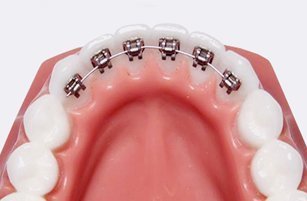
Close-up of brackets and an archwire fitted on the inner surface of upper teeth on a model
The same principle applies whichever appliance carries the force. Clinic photo.

Tooth movement and supporting tissues
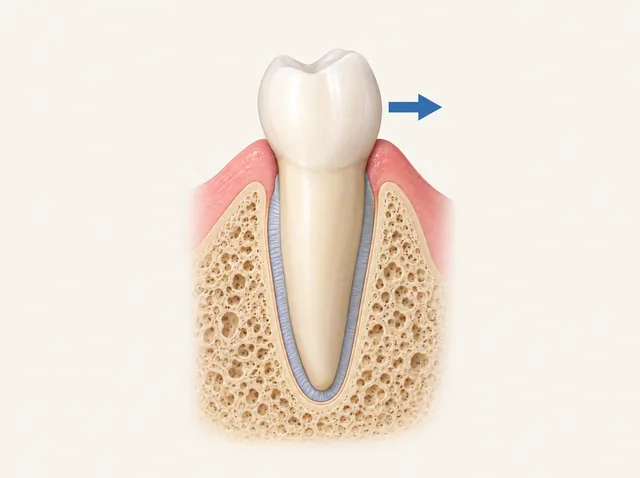
AI educational section of one natural tooth in supporting tissues with a small lateral force arrow and no bracket.
AI educational illustration. Controlled force acts on a tooth within its supporting tissues. This explains tooth movement, not jaw growth or a predicted treatment result.

How the plan is explained

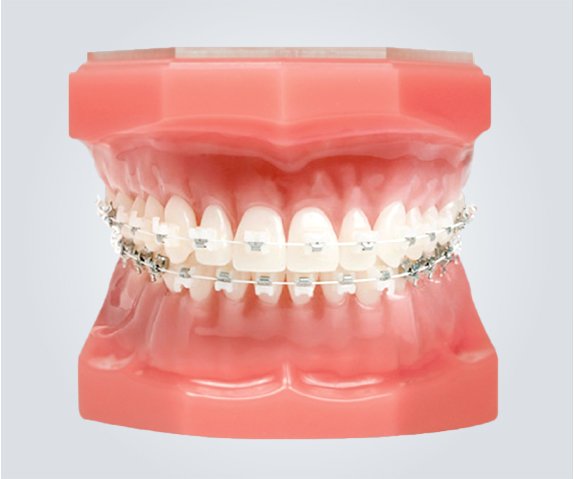
Dental training model fitted with tooth-coloured brackets and archwires on both arches
Appliance model used when the plan is explained. Clinic photo.
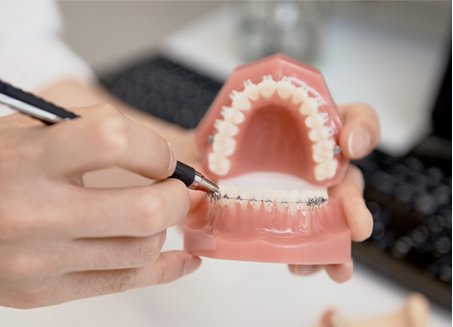
A clinician pointing at a dental model with an instrument during an explanation

Appliances considered for different bite problems

These are options, not consecutive treatment steps. Assessment of the bite and growth pattern determines whether an appliance is appropriate and when it may be used.

Assessed for selected bite problemsHeadgear

A clinician may consider headgear for selected bite problems after assessing the teeth and jaws. Its use and wear instructions depend on the individual plan.

Headgear: bow and padded support
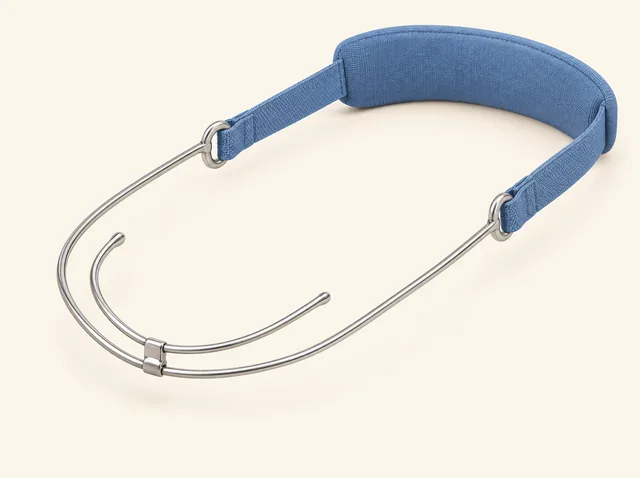
AI educational rendering of a headgear appliance alone, with two nested metal bows and a blue padded strap; no teeth or person.
AI educational illustration. A simplified headgear shows the inner and outer bows, flexible links and padded support. It does not show how the appliance is fitted or adjusted.
Upper jaw and tooth positionFacemask

A facemask applies forward pull to the upper jaw and teeth. The clinician assesses whether this approach is appropriate for the child's bite.

Facemask supports and upper attachment
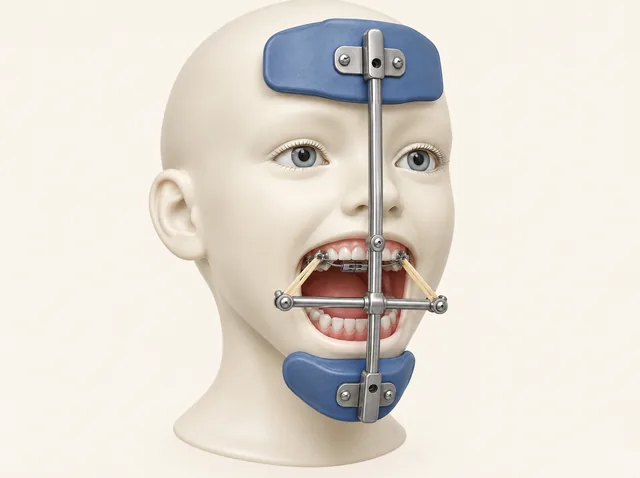
AI educational mannequin with a facemask supported at the forehead and chin, with paired elastics connecting to an upper dental appliance.
AI educational illustration. This teaching model shows the forehead and chin supports, connecting frame and paired elastics of a facemask. It explains the device concept, not an individual fitting or treatment result.
Prominent upper front teethActivator (functional appliance)

An activator is one type of functional appliance. These appliances may be considered for growing patients whose upper front teeth sit ahead of the lower teeth. The clinician assesses suitability and explains what changes can reasonably be expected.

An activator study model
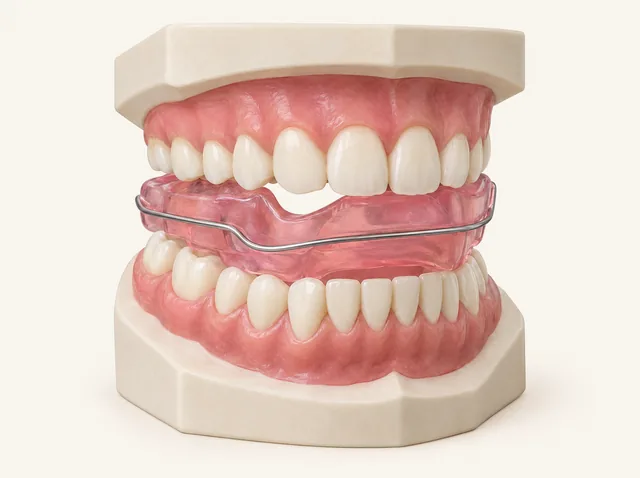
AI educational study arrangement of a one-piece acrylic activator between upper and lower dental models, with a continuous labial wire.
AI educational illustration. A one-piece activator is shown in a study arrangement between upper and lower dental models. This is not a real bite position or predicted jaw-growth result.

Records from the clinic

Children's orthodontic records from the Bucheon clinic, photographed after treatment.
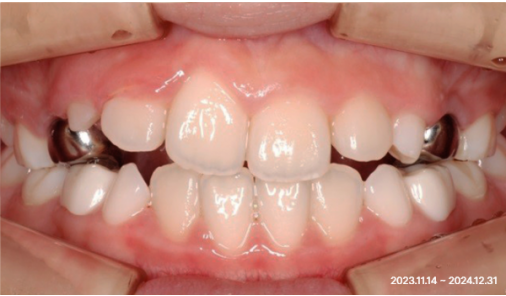
Clinical record 1

Intraoral photograph of a child's front teeth recorded after growth-stage orthodontic treatment

Ectopic front tooth with crowdingGrowth-stage orthodontics2023.11.14 - 2024.12.31

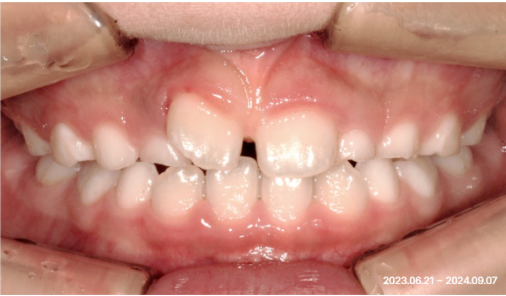
Clinical record 2

Intraoral photograph of a child's front teeth recorded after the bite relationship was corrected during growth

Front-teeth bite relationshipGrowth-stage orthodontics2023.06.21 - 2024.09.07

Records taken at the clinic, published as provided. Results vary by person, and treatment carries risks and possible side effects - see the recovery and precautions section on this page. Published with the patient's written consent for promotional use; periods as recorded.

Wearing the appliance, and what to expect

First weeks

Getting used to it

  • Speech and eating feel different for a while.
  • Mild soreness after an adjustment is common and settles.
  • Removable appliances only work for the hours they are actually worn.

During treatment

Cavities are watched at the same time

  • Appliances make brushing harder, so cavity risk goes up.
  • Dental problems that arise are handled alongside the orthodontic work.
  • Eruption is rechecked at each visit, not only at the start.

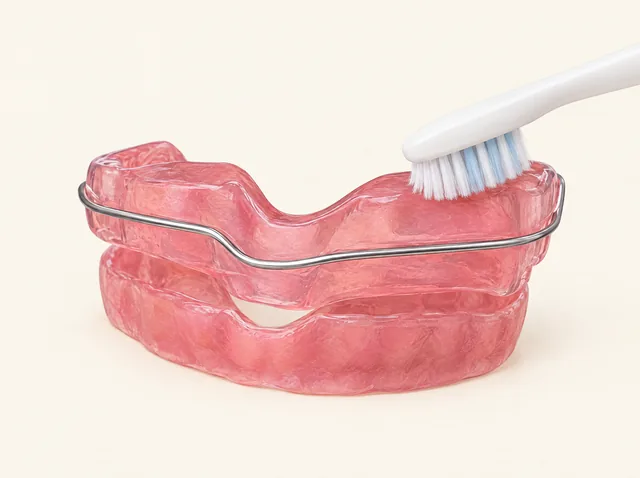
Care for a removable appliance

AI educational rendering of a pink one-piece removable activator with a soft toothbrush touching its outer acrylic surface.
AI educational illustration. A soft brush is shown against the outer acrylic surface of a removable activator. This is a general care example; follow the cleaning instructions given for the individual appliance.

After the appliance

The result has to be held

  • Teeth drift back if nothing holds them.
  • A retainer is part of the treatment, not an optional extra.
  • Some children still need an alignment phase after the permanent teeth come in.

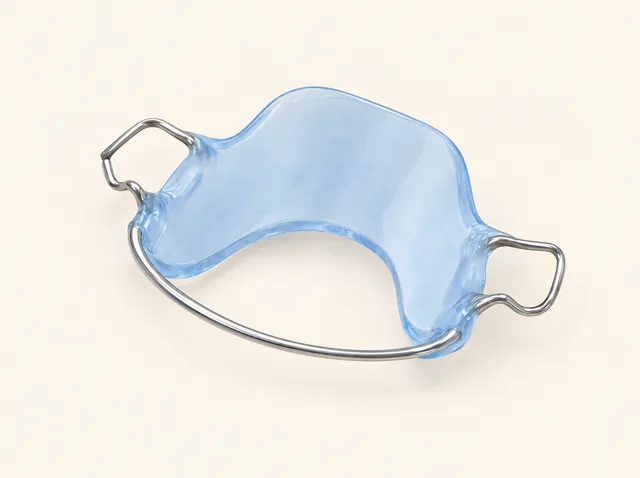
A removable retainer example

AI educational rendering of a standalone pale-blue acrylic retainer with a front wire and two posterior clasps, without a dental model.
AI educational illustration. One removable retainer is shown with an acrylic plate and wire components. This is an example of retention equipment, not the exact retainer prescribed for every child.

An honest note for international families

Children's growth-stage orthodontics is not a one-trip treatment. Appliances must be adjusted as the child grows, which means regular in-person visits over months to years. We recommend it for families residing in Korea or staying long term.

If you are visiting briefly, we can examine your child and share findings you can take to a local orthodontist, but we will not start a treatment we cannot properly supervise.

Who looks after your child

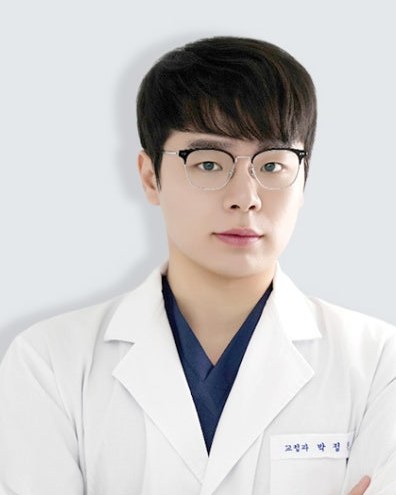
Dr. Park Je-hyuk

Dr. Park Je-hyuk

Orthodontics

  • Board-certified specialist in Orthodontics (Ministry of Health and Welfare, Korea)
  • Board-certified specialist in Integrated Dentistry (Ministry of Health and Welfare, Korea)
  • Commendation from the Minister of Health and Welfare, Korea
  • Member, World Federation of Orthodontists (WFO)
  • Clinical poster presented at the American Association of Orthodontists (AAO) annual session
  • Certified provider, SERAFIN clear aligners and Incognito lingual braces
View qualifications
Dr. Park Jeong-hwan

Dr. Park Jeong-hwan

Orthodontics

  • Board-certified specialist in Orthodontics (Ministry of Health and Welfare, Korea)
  • Ph.D. in Orthodontics
  • Certified member, Korean Association of Orthodontists
  • Member, American Association of Orthodontists (AAO)
  • Clinical poster presented at the European Orthodontic Society (EOS) congress
View qualifications

Before an appliance is chosen, we confirm

  • Board-certified specialists diagnose and manage cases together, so a child's plan is reviewed with eyes on cavities, eruption and gum health - not orthodontics in isolation.
  • Treatment is paced to each child's own growth rather than to a fixed schedule.
Language
English on the messaging line and at the clinic
Clinics
Gangnam · Cheongdam · Bucheon

Questions parents ask

At what age should my child first see an orthodontist?

There is no single right age - it depends on the problem. An examination will tell you whether to treat now, monitor, or wait.

We are an expat family in Korea. Can our child be treated here?

Yes - families living in Korea are exactly who this treatment suits. If you may relocate mid-treatment, tell us at the consultation: we will plan phases accordingly and prepare records for a smooth handover to an orthodontist in your next country.

Will early treatment mean my child never needs braces later?

Not necessarily, and we will not promise that. The benefit of the early phase is creating better conditions - it does not guarantee that a second phase will never be needed.

How often will we have to come in?

Often enough that the appliance keeps pace with growth, over months to years. The exact interval is set after the growth assessment, since children grow at different speeds.

What if my child will not wear a removable appliance?

Tell us early. A removable appliance only works for the hours it is actually worn, so if wear time is unrealistic we would rather change the plan than let the treatment drift.

Bring the question to an examination

Send your child’s age and what you have noticed so we can help arrange an assessment. Whether treatment or continued observation is appropriate is decided after an examination.

On this page

Children’s orthodontics

Contact the clinic