Enamel thickness
How much enamel is left on the front surface.
Bonding relies on enamel, so it sets the lowest preparation level that still works.

Smile Design Center · Gangnam · Cheongdam · Bucheon
Veneers are thin porcelain restorations bonded to the front of selected teeth to restore shape, proportion or severe discolouration.
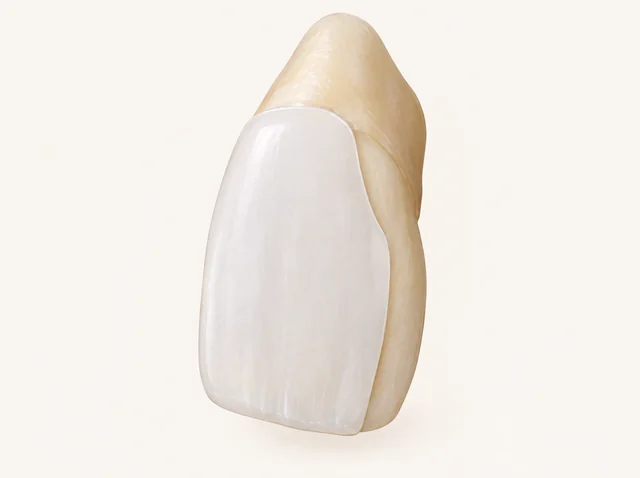
Conceptual illustration, not a patient result or a treatment plan.
Veneers are thin porcelain restorations bonded to the front of selected teeth. The dentist first checks enamel, tooth position, gum line and bite, then decides whether no-prep, minimal-prep or conventional preparation is appropriate and how many teeth should be included.
Veneer treatment is usually completed in one to two visits. The minimum stay is confirmed after the exam.
No-prep, minimal-prep or conventional. Enamel, tooth position and bite decide which one applies.
Enamel, tooth position, gum line and bite are reviewed together, not one by one.
Assessment, shape and shade planning, bite and preparation check, then bonding and a final bite review.
Four readings decide the plan. Each can move the preparation level up or down.
How much enamel is left on the front surface.
Bonding relies on enamel, so it sets the lowest preparation level that still works.
How far each tooth sits from the planned edge line.
If fitting a veneer to a misaligned tooth would require excessive enamel removal, orthodontic treatment should be considered.
Where the gum sits on each tooth and whether it is level.
An uneven gum line changes visible tooth length before any ceramic is made.
Where the upper and lower teeth meet, and any grinding wear.
Grinding or biting hard objects can shorten the life of a veneer, so the bite is planned around it.
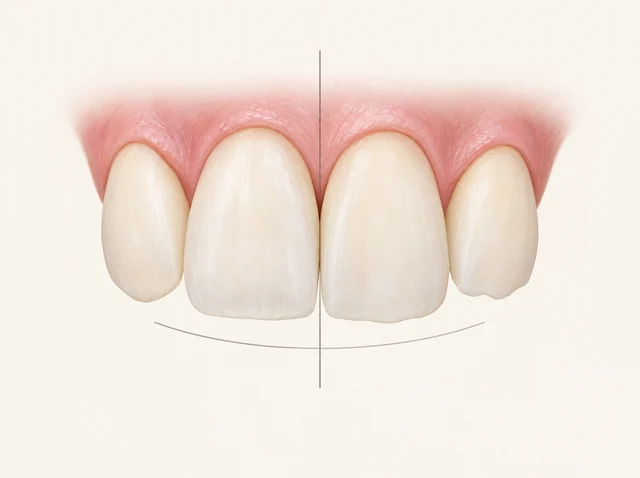
Conceptual illustration, not a patient result or a treatment plan.
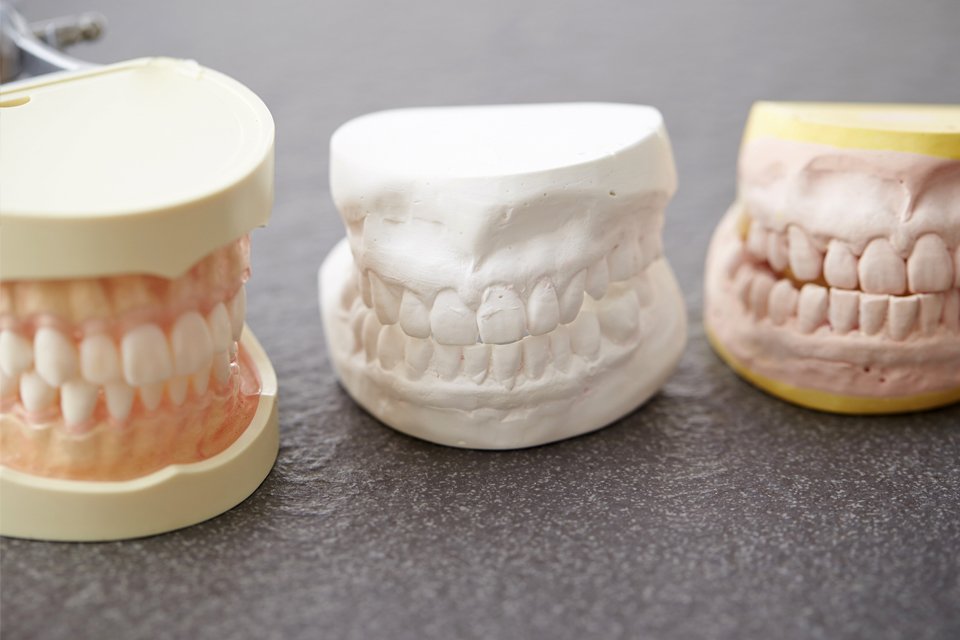
Pick the closest one to see which sections to read first. Not a diagnosis.
Midline, smile line and the width-to-length ratio of each tooth are planned before any material is chosen. If the teeth are tilted rather than shaped differently, orthodontics may be the better route.
The tooth underneath still shows through, so the base colour is recorded before the ceramic is layered. Whitening is checked first when the discolouration may respond to it.
Veneers are most appropriate when a tooth is chipped, broken or severely discoloured and genuinely needs restoration. The cause of the wear is checked so the same edge does not chip again.
Treating healthy teeth for purely cosmetic reasons can lead to side effects, so specialist dentists always begin with a careful consultation about your teeth and goals before recommending veneers.
Not a diagnosis. The in-clinic examination decides which options are open to you.
Three decisions are made in order. Changing one changes the other two, so they are never decided separately.
Midline, smile line, edge position and the width-to-length ratio of each tooth are set first. This is what makes the result read as natural rather than uniform.
The tooth underneath still shows through the ceramic, so the base colour is recorded against a shade tab before the layers are built. Existing crowns do not change colour the way natural teeth do.
How much enamel is reduced follows from the first two decisions and from how far the tooth sits from the planned position. Less reduction is not automatically the right answer.
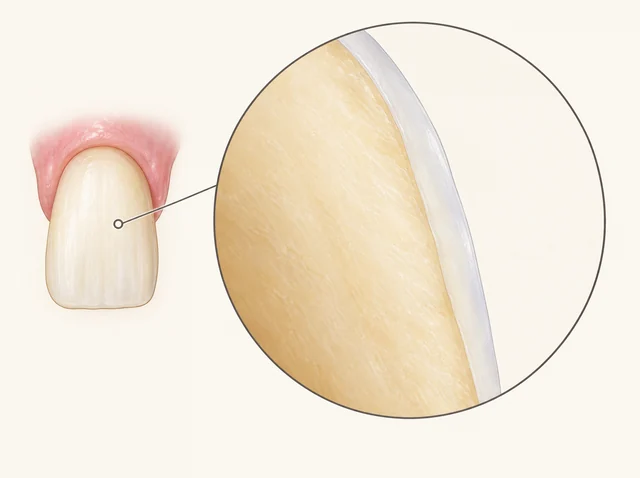
Conceptual illustration, not a patient result or a treatment plan.
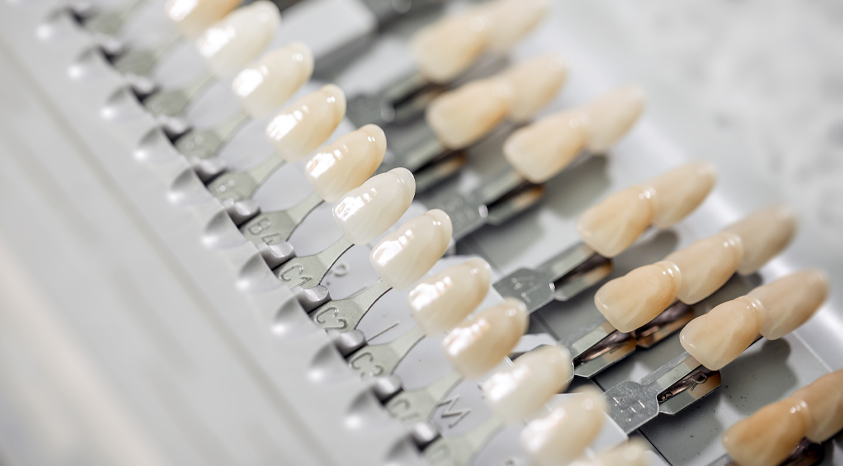
All three are used here. Each follows from what the examination finds.
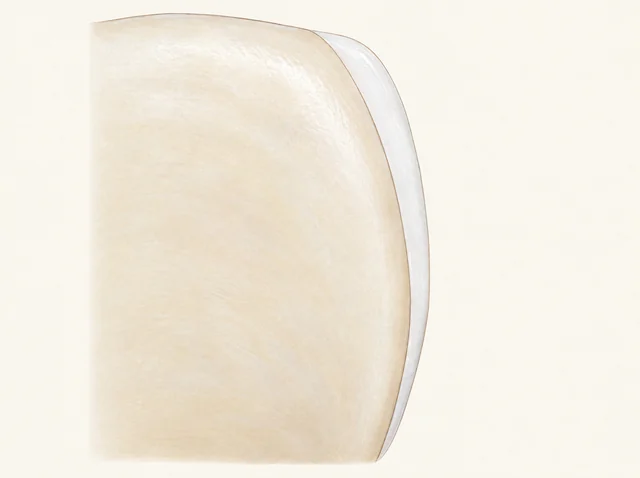
Bonded on the enamel with no reduction.
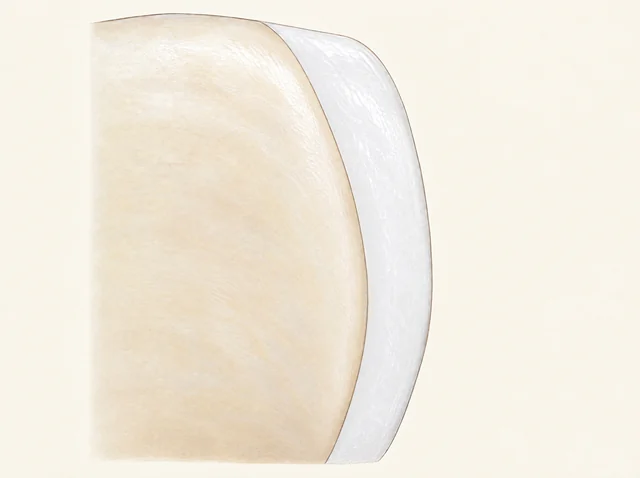
A thin layer of enamel is reduced first.
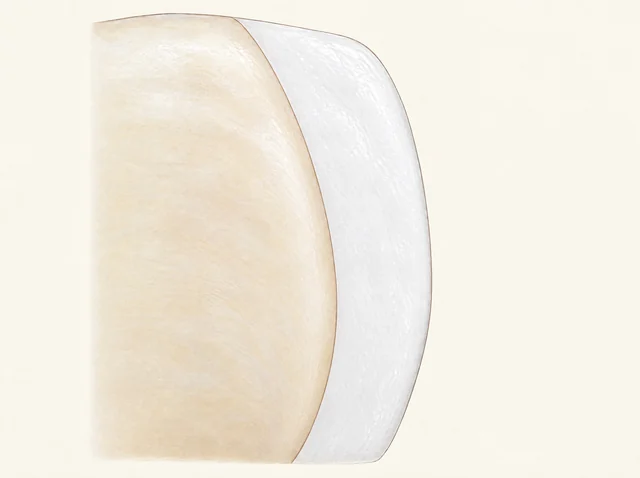
More enamel is reduced before bonding.
Schematic comparison, not to scale. These are alternatives, not treatment stages or a prediction for one patient. The method and preparation amount are decided after assessment.
An example sequence. Each veneer is handcrafted, so the fabrication schedule is planned in advance.
Visit 1 · records
Enamel, tooth position, gum line and bite are examined and recorded. Shape, shade and how many teeth to include are agreed before anything is touched.
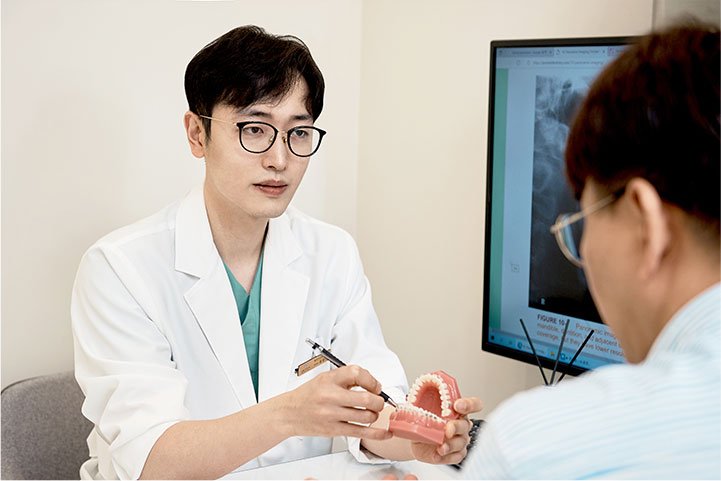
Visit 1 · same day
Preparation follows the level agreed in the plan. An impression or scan is taken and, where the plan calls for it, a temporary is fitted.
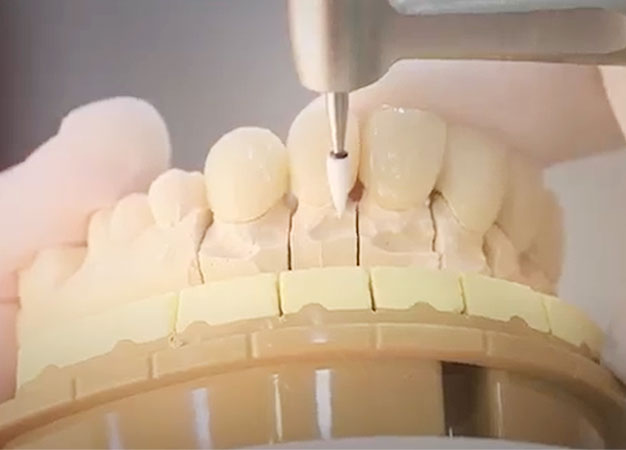
Between visits
Each veneer is built by hand on the working model, layer by layer, against the shade recorded at the first visit.
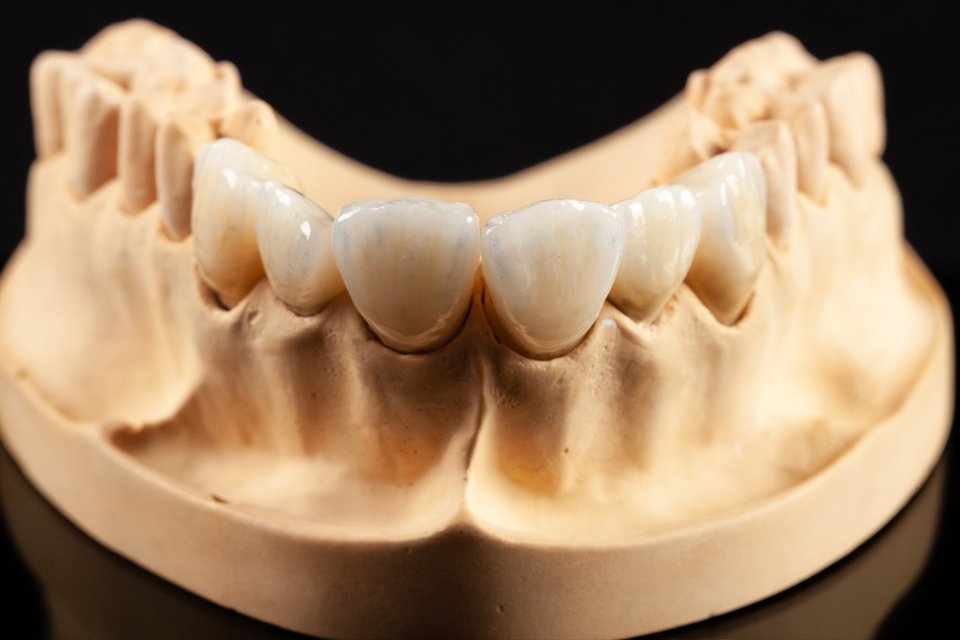
Visit 2 · fitting
The veneers are tried in before they are bonded, so the shape can still be corrected. The bite and contacts are checked again after bonding.
The number of days is confirmed after the examination, not before it.
That treatment comes first and the veneer stage moves after it.
First days
Cold and hot may feel sharper than usual for a while.
Tell the clinic if it does not settle rather than waiting it out.
First weeks
Small bite adjustments are normal once you have chewed on the new surfaces.
Brush and floss normally; the margin at the gum needs it most.
Long term
Grinding or biting hard objects can shorten their life.
A night guard is discussed when grinding wear is found.
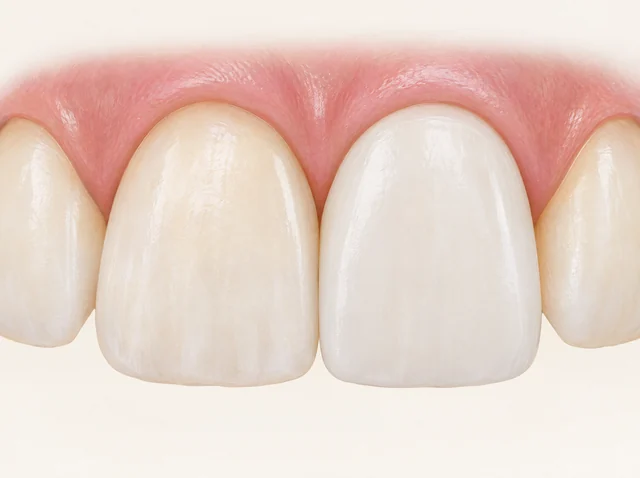
Conceptual illustration, not a patient result or a treatment plan.
How long veneers last varies with the material, your bite, oral hygiene and regular check-ups, so a fixed figure cannot be promised.
Reduced enamel does not grow back, and a bonded restoration can chip or debond. Treating healthy teeth for purely cosmetic reasons can lead to side effects, which is why the consultation comes first.
Front-tooth restorations photographed at the clinic, with the recorded treatment period.
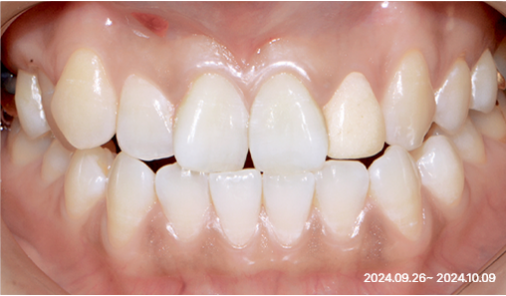
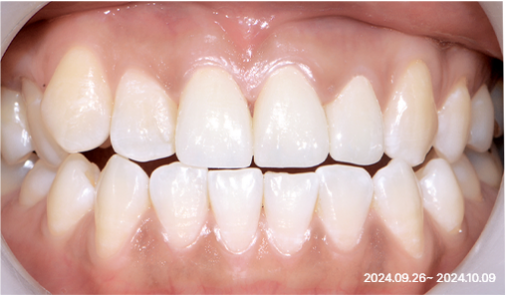
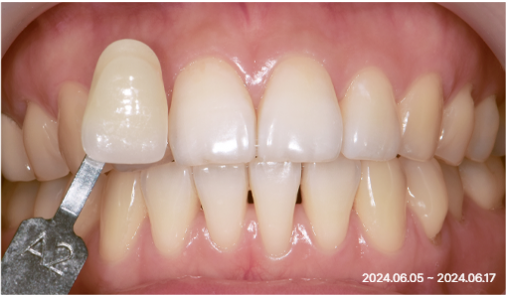
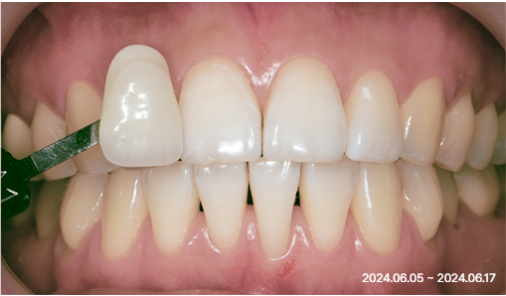
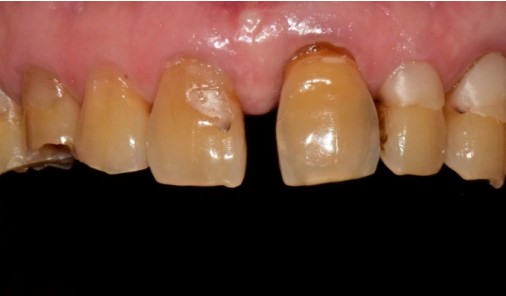
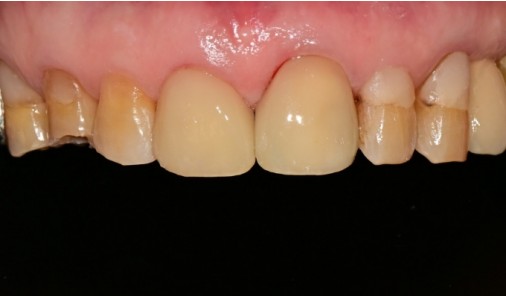
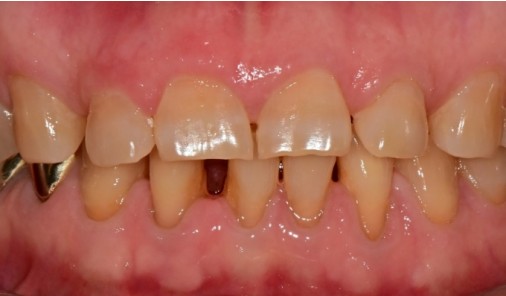
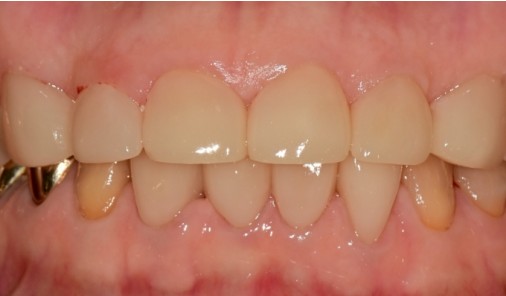
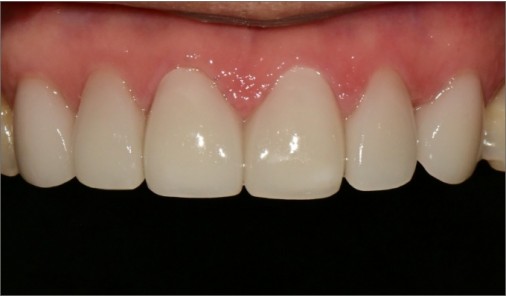
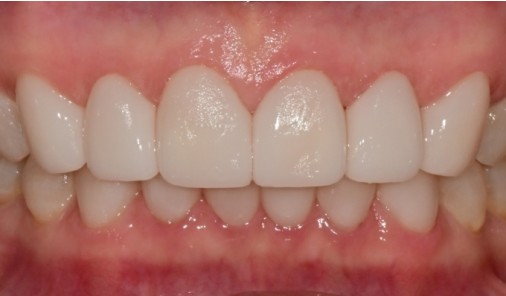
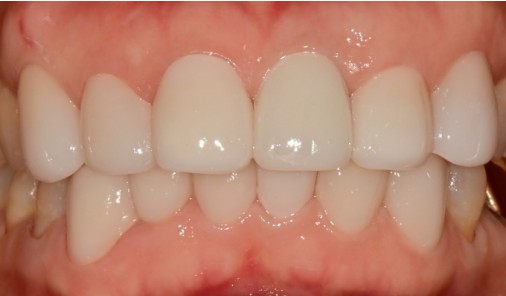
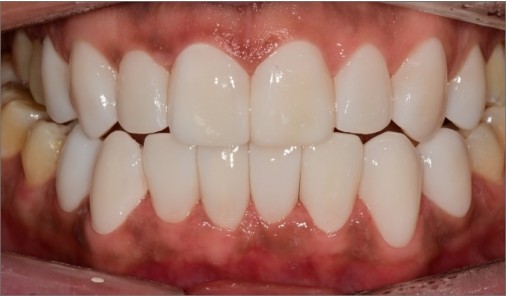
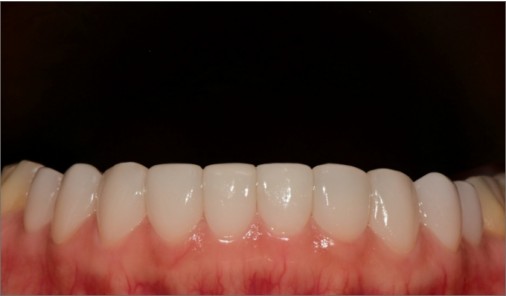
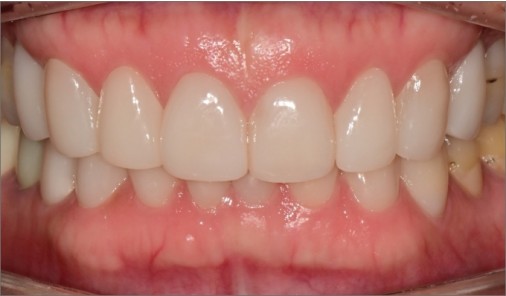
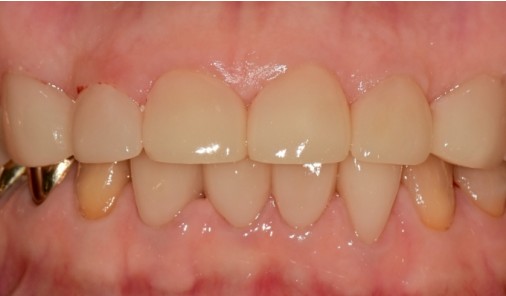
Photographs taken at the clinic, published as provided. Results vary by person, and treatment carries risks and possible side effects - see the recovery and precautions section on this page. Published with the patient's written consent for promotional use; periods as recorded.

Minimal-Prep Veneers
Board-certified specialist in Integrated Dentistry (Ministry of Health and Welfare, Korea)
All qualifications: Dr. Oh Yun-jeong
Integrated Dentistry
Board-certified specialist in Integrated Dentistry (Ministry of Health and Welfare, Korea)
All qualifications: Dr. Lee Jeong-baekA plan that touches gums, bite and restoration is discussed by the specialists in each field first.
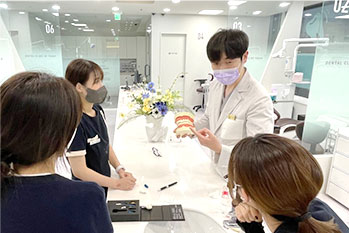
Veneer treatment is usually completed in one to two visits. Because each veneer is handcrafted, the fabrication schedule is planned in advance, which helps if you are in Korea for a limited time. The minimum stay depends on tooth condition, preparation needs and the fabrication method, and is confirmed after an in-clinic examination.
How long veneers last varies with the material, your bite, oral hygiene and regular check-ups, so a fixed figure cannot be promised. Habits such as grinding or biting hard objects can shorten their life. Your dentist reviews these factors at the consultation and explains realistic expectations and aftercare for your case.
If your teeth are healthy, the consultation should first review your goals, the risks and any tooth structure that would need to be removed before veneers are considered.
Enamel, tooth position, gum line and bite are reviewed together. Those four readings decide whether no-prep, minimal-prep or conventional preparation is appropriate and how many teeth should be included.
Existing crowns and veneers do not whiten in the same way as natural teeth. That is why the shade is agreed before fabrication, and why whitening is considered before the ceramic work rather than after it.
Not if the tooth's position would mean removing excessive enamel for a veneer. Orthodontic options should be discussed in that situation.
Replies during clinic hours (KST). Results, cost and duration are confirmed after in-clinic diagnosis.