A visible mark
You can see white spots or dark stains on a tooth, even without pain
Assessment and visit planning
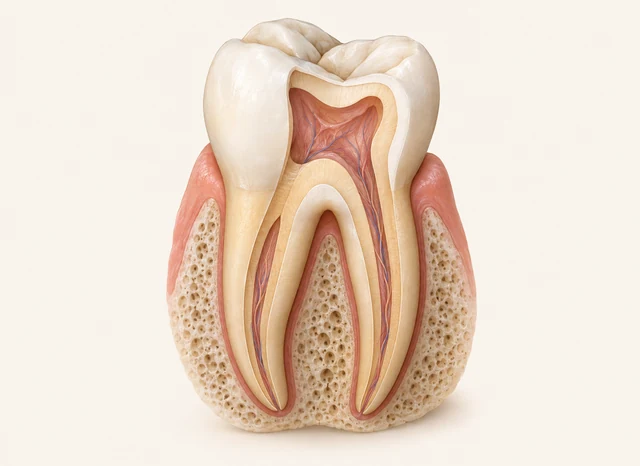
Inside a tooth
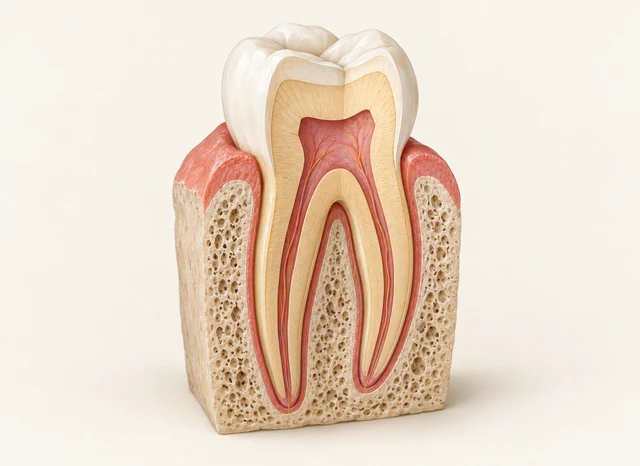
Treatment depends on how much tooth structure is affected and the condition of the pulp inside. An examination helps the dentist plan what this tooth needs.
Tooth decay damages the enamel and can extend into deeper tissues. Early changes before a cavity forms may be managed without a filling; a cavity may need restoration. The dentist assesses the depth, remaining tooth structure and pulp condition before recommending a filling, another restoration or root-canal care. The diagrams below explain different findings, not an inevitable four-stage sequence.
The treatment plan is confirmed after examination.
You can see white spots or dark stains on a tooth, even without pain
Assessment and visit planningA tooth twinges with sweet, hot or cold food
Assessment and visit planningAn old filling has chipped, darkened or feels rough
Assessment and visit planningEnamel, dentin and pulp describe tissue locations. Pulp necrosis describes loss of living pulp tissue. These illustrations help explain the assessment; symptoms or image color alone cannot determine the diagnosis or treatment.
Outer layer
The affected area is limited to enamel. Early decay may have few symptoms. Before a hole forms, the dentist may recommend measures to control decay and monitor the tooth. If a cavity is present, the need for a restoration is assessed.
At the enamel
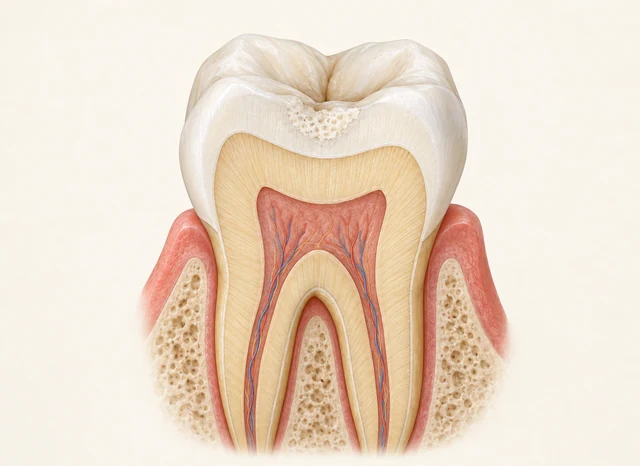
Beneath the enamel
Decay has reached dentin beneath the enamel. Sensitivity can occur, but symptoms do not show the full extent. The size and position of the cavity and the remaining tooth help determine whether a filling, inlay, onlay or another restoration is appropriate.
Below the enamel
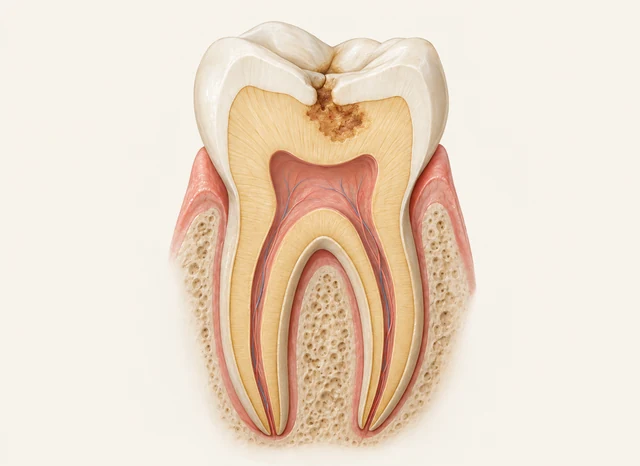
Inside the tooth
Deep decay can affect the pulp inside the tooth. The dentist evaluates its condition and whether root-canal treatment is needed. The final restoration is chosen separately; pain intensity alone does not determine either decision.
Close to the pulp
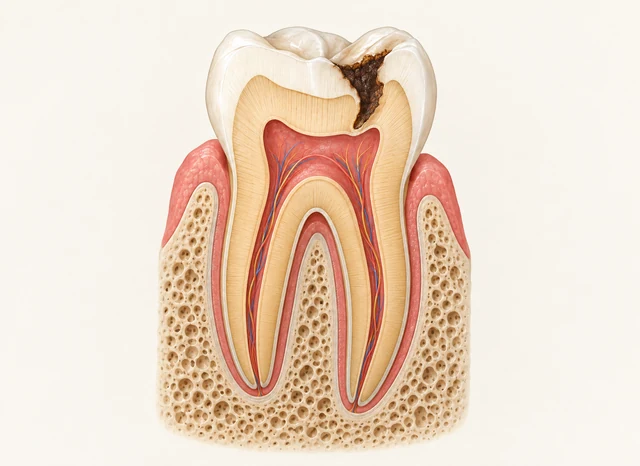
Preservation or extraction assessment
Pulp necrosis means the pulp tissue has lost its vitality. It requires clinical assessment and is not simply a depth visible in a picture. The dentist reviews whether the tooth can be preserved with root-canal care or whether another approach, including extraction, is needed.
Pulp vitality needs assessment
These are treatment phases, not a fixed number of appointments. The visit plan depends on the diagnosis and treatment required.
The dentist examines the tooth and confirms the extent of decay before recommending only the treatment needed for that tooth.
For early decay before a hole forms, the dentist may recommend measures to control decay and monitor the tooth. If restoration is indicated, the affected area is treated accordingly. Findings involving the pulp are assessed before deciding whether root-canal treatment is needed.
When a restoration is needed, the dentist selects a filling, inlay, onlay or another restoration for the tooth. Root-canal care or extraction is assessed when necessary, rather than decided by depth alone. Appointments follow the care actually selected, including monitoring when appropriate.
Each has different strengths. Resin bonds directly to the tooth, so less healthy structure is removed, and its colour blends in — well suited to smaller cavities. Ceramic inlays and onlays reproduce natural tooth colour with good strength, making them a popular aesthetic choice. Gold has hardness similar to natural teeth and withstands chewing force well, which makes it advantageous for cavities between teeth where the original shape must be rebuilt. The right choice depends on the cavity's size and position, your bite and your budget — we explain the trade-offs case by case.
Direct filling
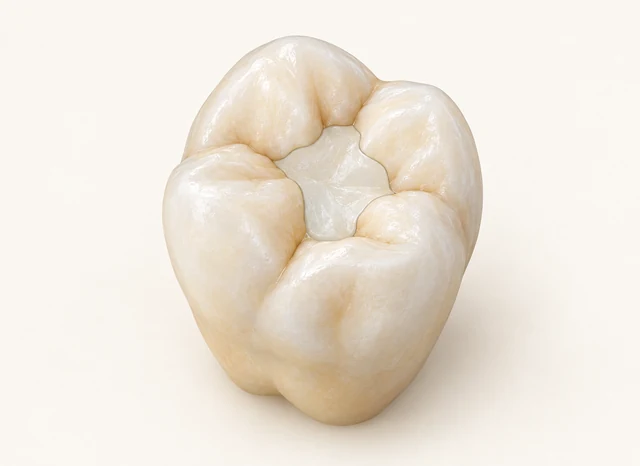
Inlay: between the cusps
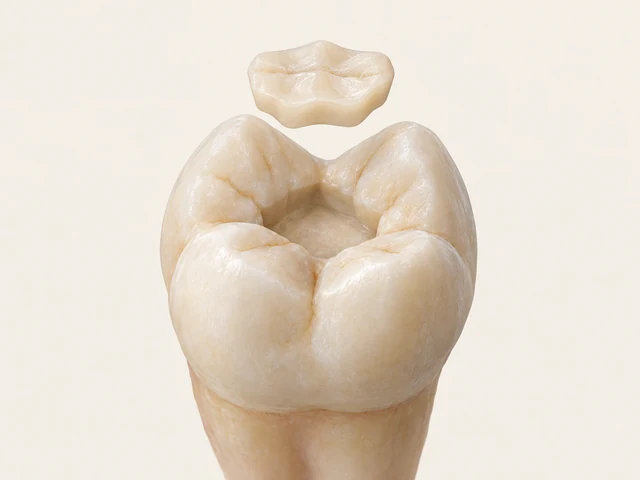
Onlay: including cusp coverage
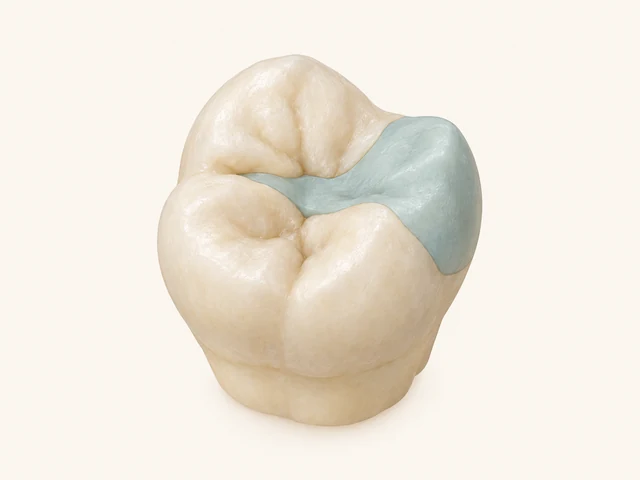
The number of visits depends on the care selected after examination. A small resin filling is usually completed in one visit. Inlays and onlays typically need two visits: one to prepare the tooth and take an impression, and one to bond the final piece. If root-canal treatment and a final restoration are indicated, more appointments may be needed and may not fit a short itinerary. Tell us your dates in advance so the visit plan can be assessed.
Yes. Early decay may cause no symptoms, and pain alone does not show how much tooth tissue is affected. Dental examinations help identify changes that can be hard to notice yourself. Depending on the findings, the dentist may recommend controlling and monitoring early decay before a hole forms, or a restoration when needed.