Fixture
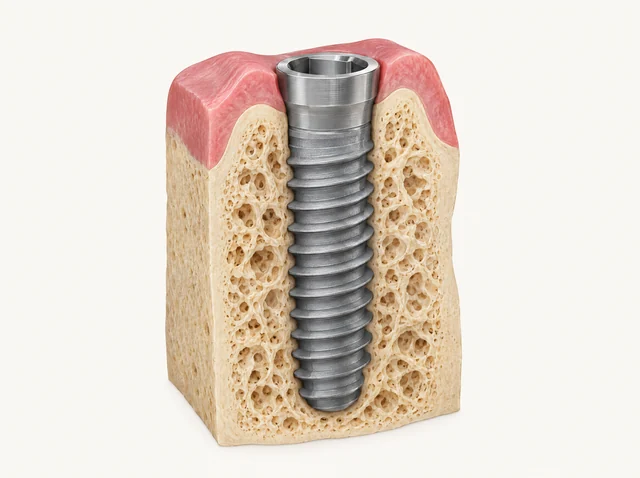
The titanium root. Position, depth and angle are planned on 3D CT and, when suitable, guided by a printed template.

Implant Center · Gangnam · Cheongdam · Bucheon
A dental implant replaces a missing tooth root with a fixture that supports a crown. Oral examination and 3D CT are used to check bone volume, gum health and nearby anatomy. Extraction or bone grafting may change the sequence, and the final crown is fitted after the implant reaches sufficient stability and healing.
Assessment · Treatment options · Placement & healing · Long-term care

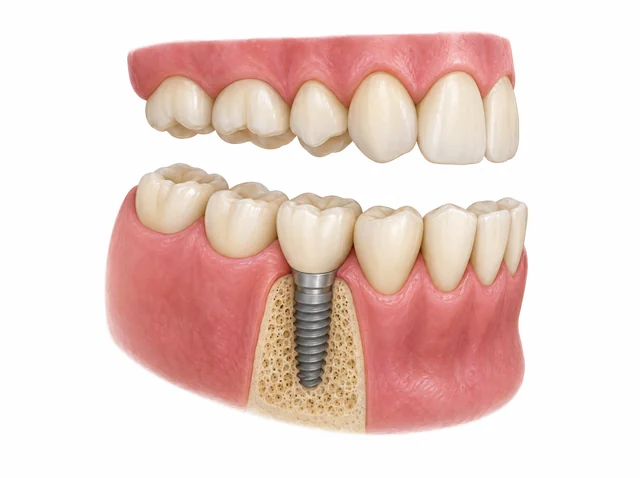
Three parts, three jobs. The crown is the only part you see.
The titanium root. Position, depth and angle are planned on 3D CT and, when suitable, guided by a printed template.
The abutment connects fixture and crown through the gum. Custom abutments are used where the plan calls for them instead of stock parts.
The crown is the visible tooth. A temporary crown can go on the same day when stability allows; the final one after integration.
Not a diagnosis. Stages are confirmed only after an oral examination and 3D CT.
Read the situation closest to yours. The examination determines your plan.
When the socket and bone allow, extraction, guided placement and a temporary tooth can happen in one visit. Otherwise the fixture heals first and the crown follows.
Staged visits are common because bone volume differs from site to site. Individual implants or an implant-supported bridge are both possible.
Full-mouth implants restore the arch on multiple fixtures; an implant denture anchors a removable denture on a few. Bone, bite and overall health decide which fits.
If your jawbone lacks height or thickness, a graft can rebuild it before or during placement, using graft material matched to your case by 3D CT.
Some patients complete diagnosis and placement in one trip, then return for the final prosthesis after integration. Bone condition and initial stability decide how many stages are needed.
The 3D CT shows what the earlier implant and the bone around it look like now. The plan follows from that, and can include a graft.
Each approach is chosen for the conditions the examination reveals.
Placement and a temporary tooth in one visit.
Bone volume and initial stability; the implant integrates before the final prosthesis.
Placement through a small opening.
Jawbone condition is assessed on CT. The name describes an access method.
Bone rebuilt before or during placement.
Graft material and timing are matched to the case.
Multiple fixtures carrying a whole arch.
Bone, bite and overall health determine the sequence.
A removable denture anchored on implants.
Bone is assessed at the anchor sites; the implants integrate before the denture.
An example sequence for a single implant. Extraction, a graft or healing time can add stages.
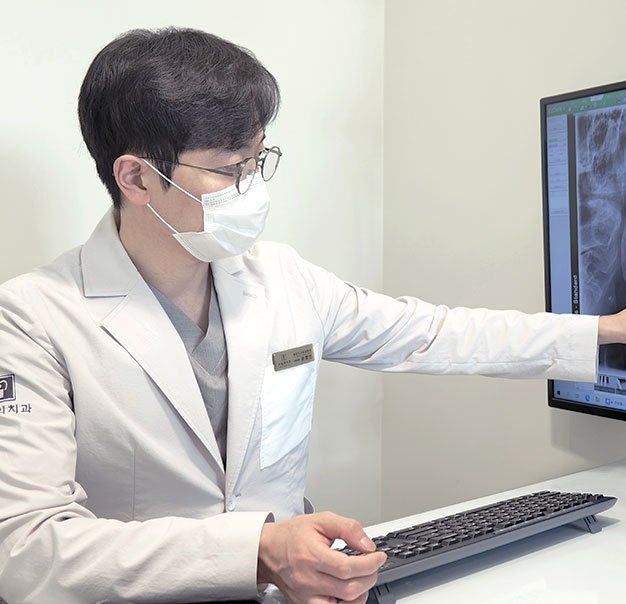
Visit 1 · exam
Bone volume, gum health and nearby anatomy are checked. Extraction or a graft changes the sequence here.
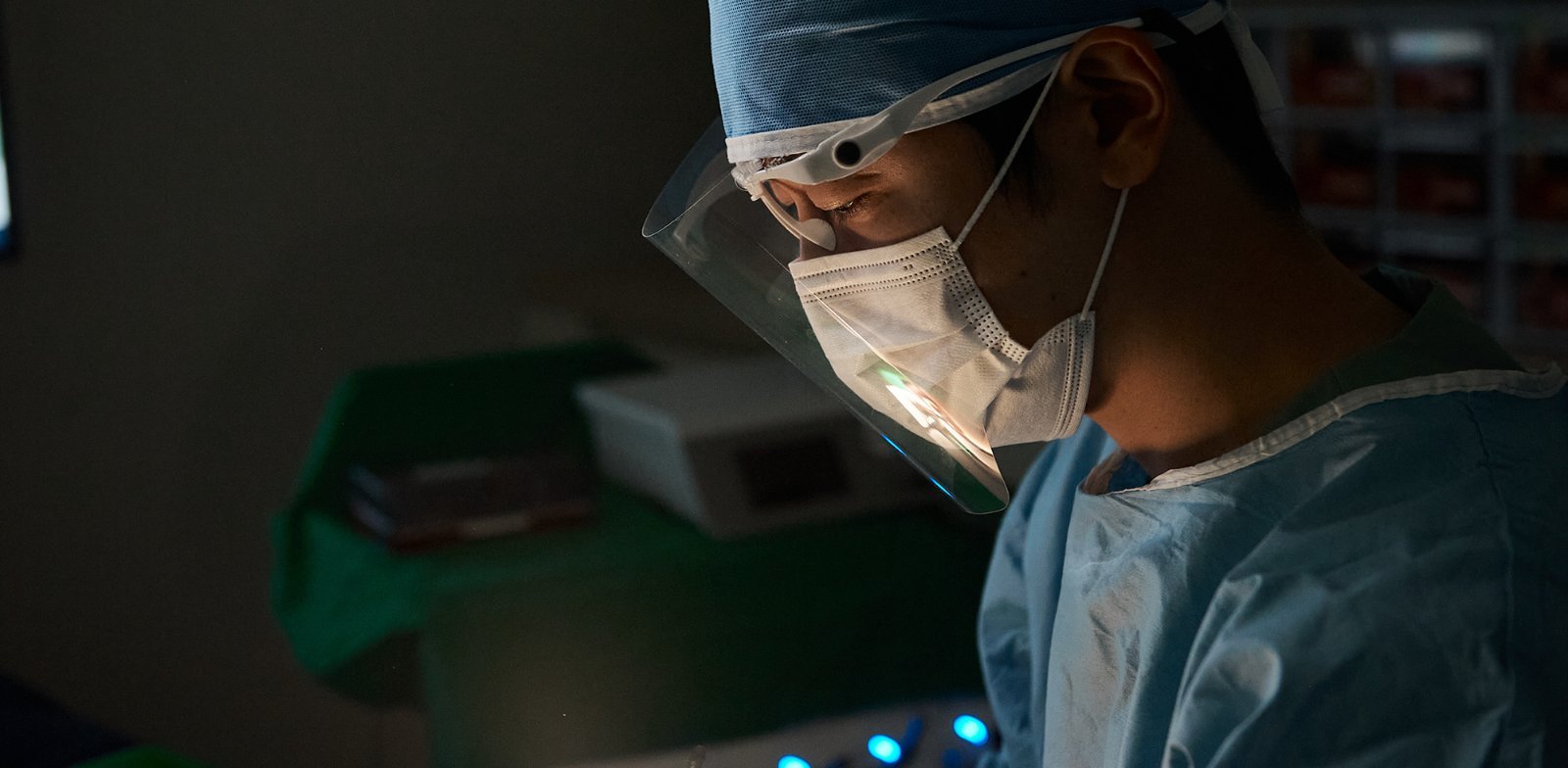
Visit 1 · same or next day
The guide directs the fixture to the planned position. With enough initial stability, a temporary tooth is fitted the same day.
At home · weeks to months
The fixture bonds with bone. Routine checks can be done near you and shared with the clinic.
Visit 2 · final tooth
Implant stability is measured with ISQ equipment after placement so the prosthesis is connected at the right time. Bite and contacts are adjusted.
Bone condition, extraction, grafting and initial stability decide it.
Days in Korea are confirmed after diagnosis, not before it.
Imaging, guided placement and stability checks inform the plan. The clinic also prepares the prosthesis and sterile instruments.
Bone height and width, and where the nerve and sinus sit.
It caps the length of the fixture and can move the plan to a graft.
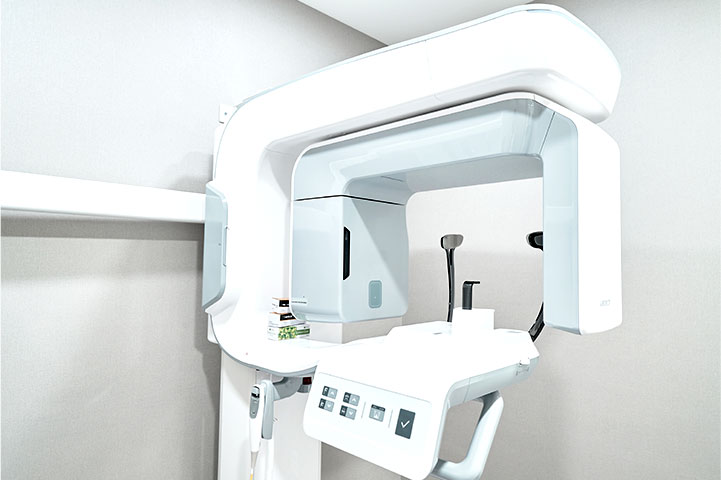
The path is rehearsed on the CT, then a patient-specific guide is printed.
It keeps the drill on the planned angle instead of on the day's judgement alone.
An ISQ reading of how firmly the fixture is held by bone.
The prosthesis is connected on the reading, not on a fixed date.
Crowns and bridges built on the same digital model.
Custom abutments are used where the plan calls for them instead of stock parts.
Instruments are cleaned, sterilised and sealed until your visit.
Surgical steps sit inside this cycle, so it is part of the plan rather than a detail.
First 24 hours
First week
Until the final crown
Patients with well-managed systemic conditions can often be treated, with the plan designed around them. An accurate history comes first.
An implant can fail to integrate, and a graft can need more healing than planned. That is why stability is measured before the prosthesis is connected. Individual results vary.
Quality care programme · up to 5 years. Check-up guidance and a warranty certificate. Conditions apply.

Integrated Dentistry
Board-certified specialist in Integrated Dentistry (Ministry of Health and Welfare, Korea)
All qualifications
Periodontics
Board-certified specialist in Periodontics (Ministry of Health and Welfare, Korea)
All qualificationsA plan that touches gums, bite and restoration is discussed by the specialists in each field first.
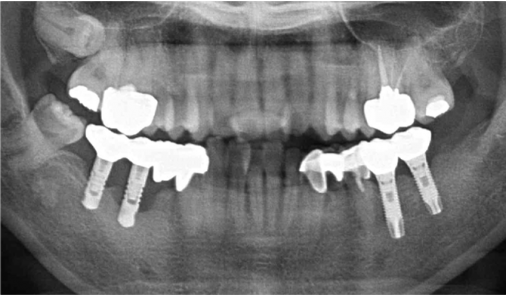
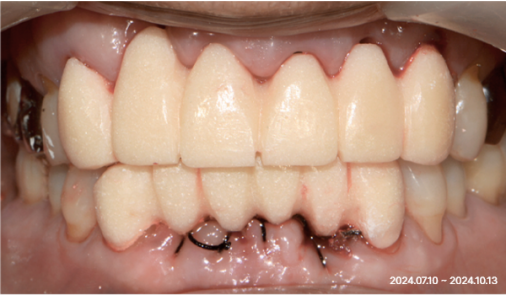
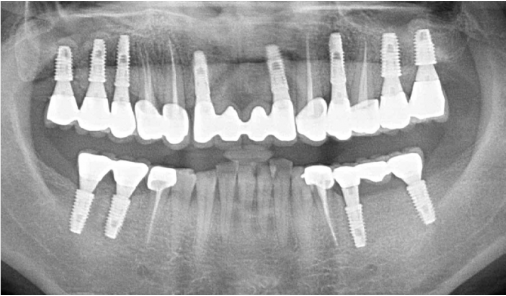
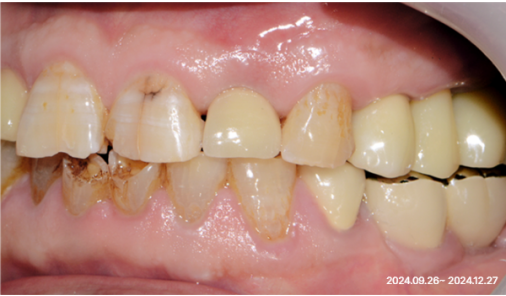
Panoramic X-rays and intraoral photographs recorded at the clinic.
Photographs taken at the clinic. Individual results vary. Published with the patient's written consent; periods as recorded.
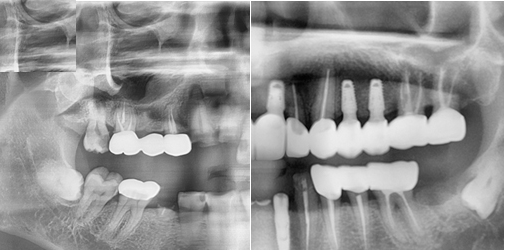
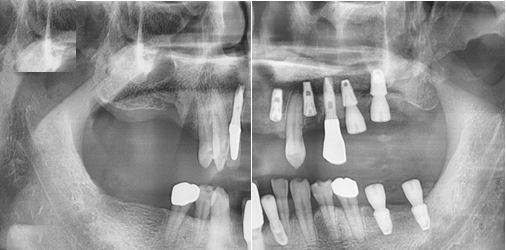
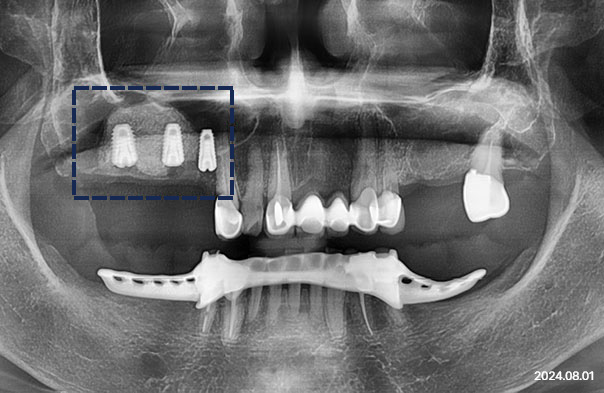
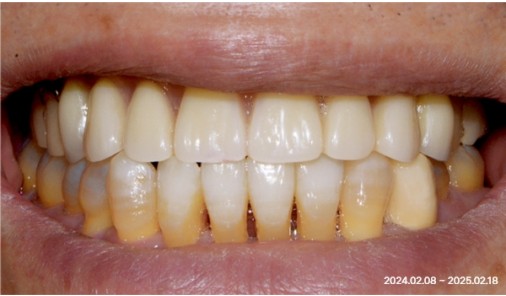
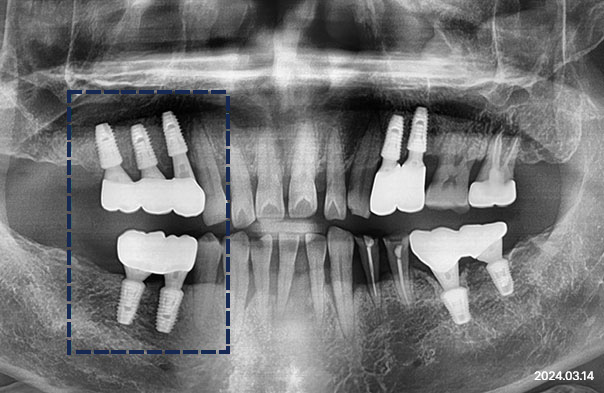
The number of visits depends on bone condition, whether extraction or bone grafting is needed, and the prosthesis schedule, so it can range from one visit to several. The dentist confirms the stages and healing interval after an oral examination and 3D CT diagnosis.
The clinic works with established implant systems and selects the fixture based on your bone condition, the treatment site and the plan confirmed at diagnosis. Implant stability is measured with ISQ equipment after placement so the prosthesis is connected at the right time. Details of the recommended system are explained before treatment.
If your jawbone lacks height or thickness, a bone graft can rebuild it before or during implant placement, using graft material matched to your case by 3D CT. Our clinic is recognized by the Korea Tooth Bank for autogenous tooth bone grafting. Whether a graft is needed is confirmed at diagnosis.
Extraction, placement and a temporary prosthesis can be done in a single visit when bone volume and initial stability allow. The final prosthesis is connected after integration, so a follow-up stage remains.
Patients with well-managed systemic conditions can often be treated, with the plan designed around them. An accurate medical history comes first, and the decision is made at the examination.
Tell us the dates you can be in Korea at the consultation, and the stages are planned around them.