Treatments

Smile Design Center · Gangnam · Cheongdam · Bucheon

No-prep veneers

We assess whether your teeth suit a no-prep or minimal-prep approach.

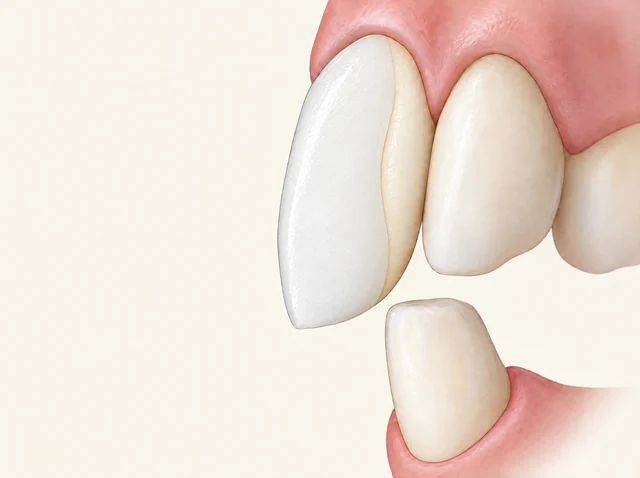
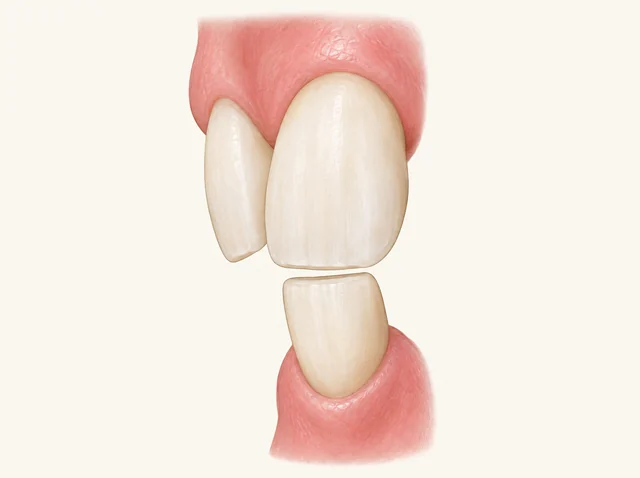
Educational view of front-tooth position and the space around neighbouring and opposing teeth.
AI-generated educational illustrationTooth position and bite are checked before deciding whether a veneer has room without preparation.

Conceptual illustration, not a patient result or a treatment plan.

Which question should the examination answer?

Choose your main concern to see what the dentist needs to assess.

Tooth position or tooth shape?

A visible gap or uneven edge is assessed with the position of each tooth and the bite. The plan is confirmed before preparation.

Restoration, not decoration

Veneers are most appropriate when a tooth is chipped, broken or severely discoloured and genuinely needs restoration. The cause of the wear is checked so the same edge does not chip again.

The consultation comes before the veneer

Treating healthy teeth for purely cosmetic reasons can lead to side effects, so specialist dentists always begin with a careful consultation about your teeth and goals before recommending veneers.

Not a diagnosis. The in-clinic examination decides which options are open to you.

Before preparing a tooth, we confirm

  • How much enamel is left on each tooth in the plan.
  • Gum health and whether the gum line is level.
  • Cavities or old restorations that must be treated first.

What no-prep means for your teeth

No-prep veneers are thin porcelain shells bonded to the front of selected teeth without reducing enamel. If preparation is needed, a minimal-prep approach may be considered; the amount may start at 0.1 mm and varies by tooth. Tooth position, gum health and bite are checked before the method and visit plan are agreed.

Tooth surface
No or minimal preparation

The examination decides the amount.

Restoration
Thin porcelain

Made to match tooth shape and shade.

Fabrication
Handcrafted

The laboratory schedule is planned ahead.

Visit planning
After diagnosis

Tooth condition and fabrication affect timing.

How much enamel would be changed?

Compare the preparation options

The difference is the space made for the restoration, not a promise of a better result.

No-prep

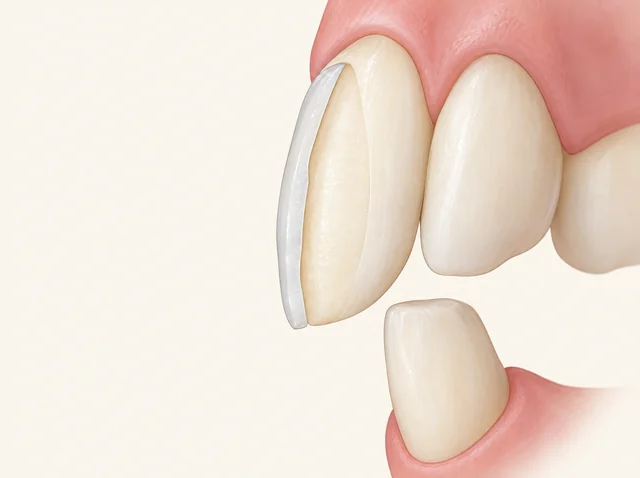
Schematic view of a veneer added to the original front-tooth contour, with neighbouring and opposing teeth for context.
AI-generated educational modelNo-prep adds a veneer without reducing the existing enamel. Tooth position and bite must leave room for the added material.

Bonded on the enamel with no reduction.

No-prep

The shell is bonded onto the existing enamel without reduction. This is considered only where tooth position and bite allow room.

What it is
A thin shell bonded on the existing enamel
Enamel removed
None
Reversibility
Enamel is kept, so less tooth structure is committed
Minimal-prep

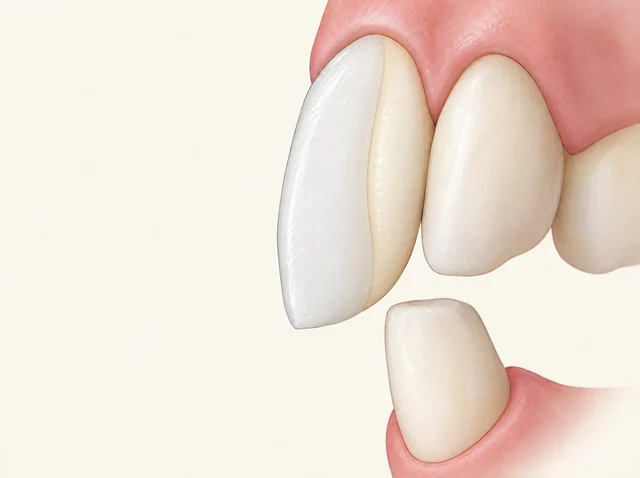
Educational view of limited facial preparation, showing the smooth bonded boundary between remaining tooth and ceramic beside neighbouring and opposing teeth.
AI-generated educational modelWhen the restoration needs room, limited preparation may be considered. The amount is planned for each tooth rather than set by a single fixed depth.

A thin layer of enamel is reduced first.

Minimal-prep

A small amount of enamel is prepared when the planned restoration needs room. Minimal preparation may start at 0.1 mm; the amount varies by tooth.

What it is
A thin layer of enamel reduced, then bonded
Enamel removed
A thin layer on the front surface
Reversibility
Reduced enamel does not grow back

Conventional

Educational view of another facial preparation level, showing a smaller remaining tooth region and thicker bonded ceramic beside unchanged surrounding teeth.
AI-generated educational modelA larger planned change may need a different preparation level. No-prep is not chosen by preference alone.

More enamel is reduced before bonding.

Other preparation

A tooth that needs a larger change may require a different preparation level. No-prep is not selected by preference alone.

What it is
More enamel reduced so thicker ceramic fits
Enamel removed
More, including the edge where needed
Reversibility
Reduced enamel does not grow back

Schematic comparison, not to scale. These are alternatives, not treatment stages or a prediction for one patient. The method and preparation amount are decided after assessment.

From the examination to the final fit

An example sequence, planned around your diagnosis and laboratory work. Confirm your visit dates before arranging travel.

  1. Before fabrication

    Diagnosis, shade and preparation plan

    The dentist checks the teeth and bite, records shape and shade, and confirms whether preparation is needed.

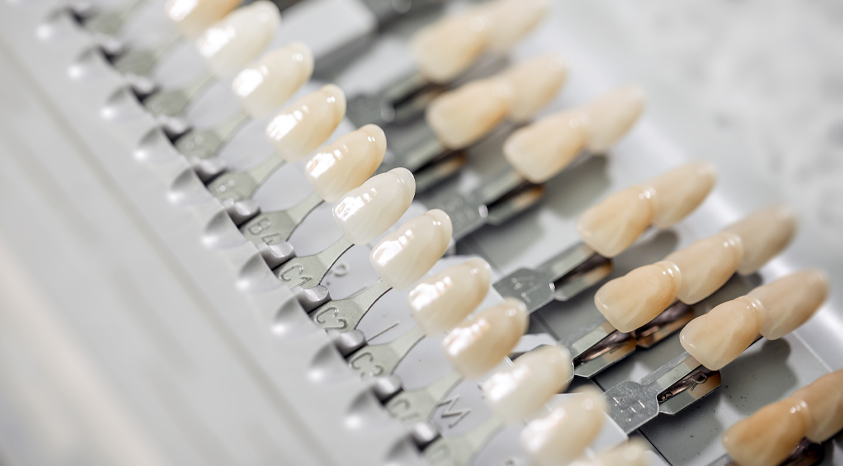
    The shade guide the clinic matches veneer ceramic against.
    Clinic-provided shade selection photograph.
  2. Laboratory stage

    Handcrafted porcelain

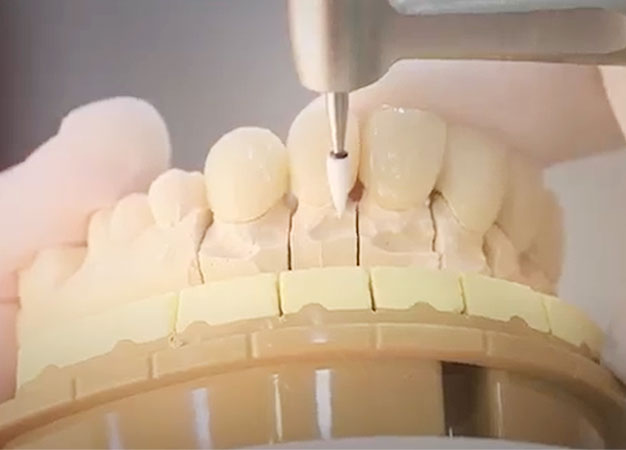
    The laboratory makes each restoration to the recorded tooth shape, shade and translucency.

    Dental technician shaping a ceramic front-tooth restoration on a plaster model
    Clinic-provided laboratory photograph.
  3. Fitting visit

    Try-in, bonding and bite review

    The restoration is tried in before bonding. The dentist checks the fit and bite again after it is bonded.

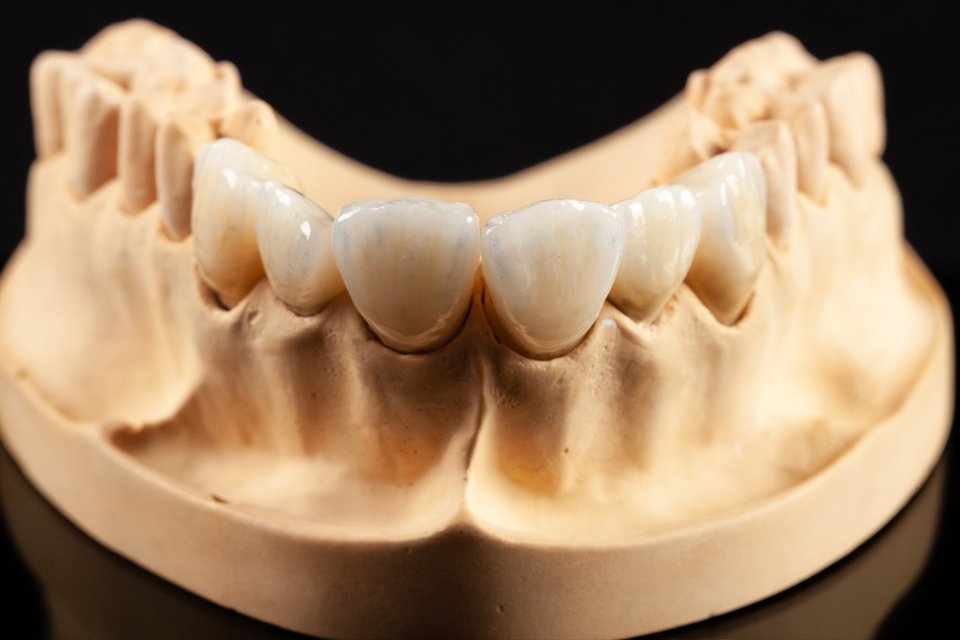
    Finished ceramic front-tooth restorations seated on a plaster working model
    Finished restorations on the working model before try-in. Clinic photo.

After fitting: care and limits

Sensitivity

After fitting

Tell the clinic if sensitivity does not settle.

Protect the margin

Daily care

Brush and floss; avoid biting hard objects.

Review the bite

Follow-up

Discuss grinding wear and bite discomfort.

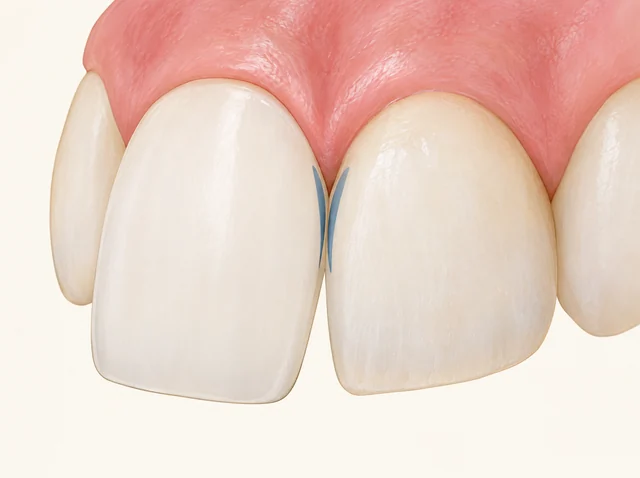
Educational diagram highlighting facing external surfaces between adjacent front teeth beside a bonded veneer.
AI-generated educational illustrationDaily care includes the external surfaces between neighbouring teeth, highlighted here. Veneers are not removed for cleaning.

Conceptual illustration, not a patient result or a treatment plan.

Understand the limits

Reduced enamel does not grow back. A veneer can chip or debond. Results and longevity vary with your bite, oral hygiene and check-ups.

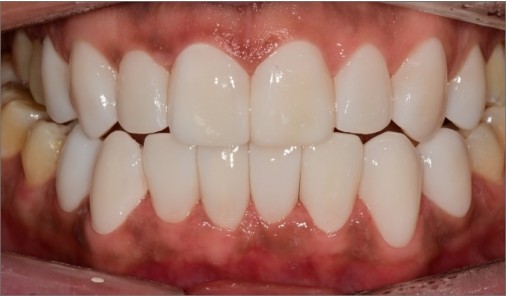
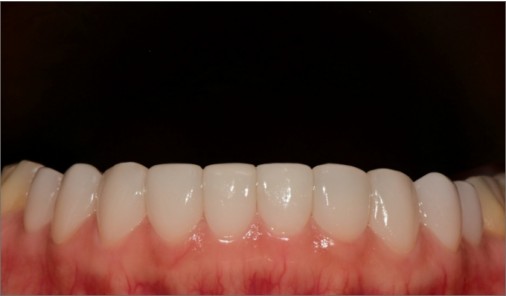
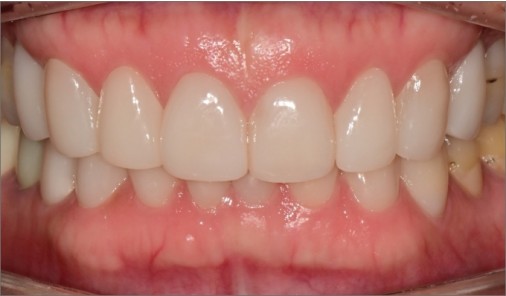
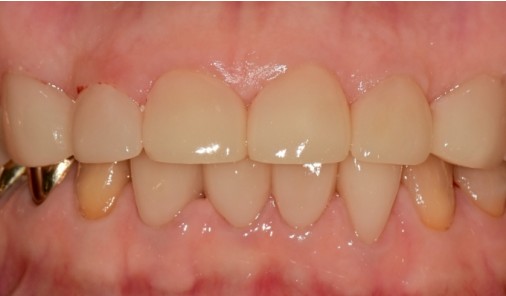
Published clinical records

Existing published records. They do not predict an individual result.

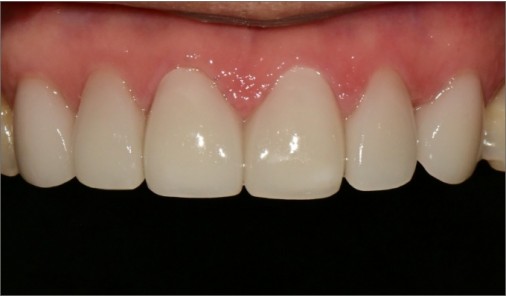
Treatment record 1

Intraoral photograph recorded after minimal-prep veneer treatment of the upper front teeth

Front teethMinimal-prep veneersTreatment record

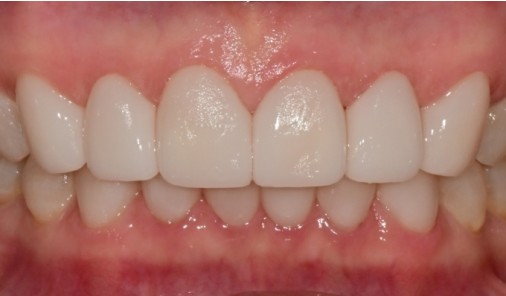
Treatment record 2

Intraoral photograph recorded after veneer treatment showing the upper front teeth

Front teethMinimal-prep veneersTreatment record

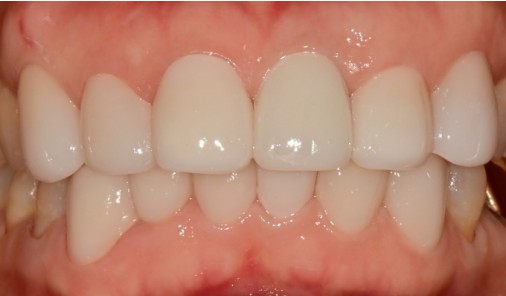
Treatment record 3

Intraoral photograph recorded after ceramic restoration of the upper front teeth

Edge shapeCeramic restorationTreatment record

Treatment record 4

Intraoral photograph recorded after ceramic restoration showing the smile line

Edge shapeCeramic restorationTreatment record

Treatment record 5

Minimal-prep veneer treatment record.

Front teethMinimal-prep veneersTreatment record

Treatment record 6

Minimal-prep veneer treatment record.

Front teethMinimal-prep veneersTreatment record

Treatment record 7

Ceramic restoration treatment record.

Edge shapeCeramic restorationTreatment record

Treatment record 8

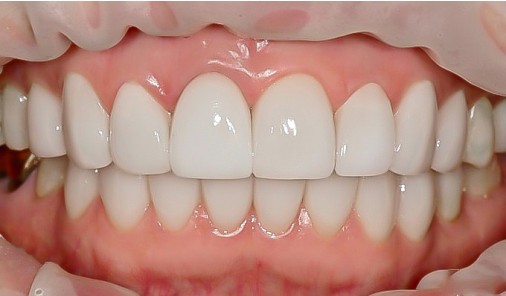
Frontal intraoral view of the upper and lower front teeth and gums.

Treatment record

Photographs taken at the clinic, published as provided. Results vary by person, and treatment carries risks and possible side effects - see the recovery and precautions section on this page. Published with the patient's written consent for promotional use; periods as recorded.

The clinicians reviewing the plan

Language
English on the messaging line and at the clinic
Branch
Gangnam, Cheongdam or Bucheon, confirmed when your visit is arranged

Questions after the plan is discussed

Will whitening change the colour of my veneers later?

Crowns and veneers do not whiten like natural teeth. We agree the shade before fabrication and consider whitening before ceramic work.

Can veneers replace orthodontics?

Veneers change tooth shape. If covering a misaligned tooth would remove too much enamel, orthodontic treatment should be considered.

On this page

No-prep veneers

Contact the clinic