
Clear aligner treatment started in another country can often continue in Korea, but it depends on the records you bring and whether the original plan can be…
Clear aligner treatment that was started in another country can often be continued in Korea, but how it continues depends on two things: the records you can bring, and whether your existing treatment plan can be transferred to a new dentist or has to be rebuilt from a fresh scan. When the original dentist can share your plan and your current trays still fit well, the change can be fairly smooth. When records are missing or the trays no longer fit, the dentist in Korea usually takes new scans and plans the remaining movement again. Either way, the decision is made after an examination, not from the brand of aligner you wear.
This comes up for people who move to Korea part-way through treatment, for people who live abroad and spend long stretches in Korea, and in the other direction, for people who start aligners in Korea and then return home. This article explains why aligner treatment is tied to the dentist who planned it, what the dentist in Korea needs to see, how the two main paths differ, and what to ask before you travel.
Why aligners are tied to the dentist who planned them
Clear aligners are not stock products. Each set is made from a digital plan that the treating dentist approves: how far each tooth moves, in what order, where small tooth-coloured bumps called attachments are bonded, and whether a little enamel is polished between teeth to make space. The trays you wear are that plan turned into plastic, one stage at a time.
In most aligner systems, the plan and the order history are held in the original dentist's account with the manufacturer. A new dentist cannot simply log in and continue. Depending on the system, the case may be transferable to another dentist with the original dentist's cooperation, or the new dentist may need to open a new case. Whether a transfer is possible, and how long it takes, is something the original practice and the manufacturer decide, which is why it is worth asking before you leave rather than after you arrive.
Even with a transferred plan, the dentist in Korea will want to check what has actually happened in your mouth. Teeth do not always move exactly as planned, and the plan on the screen is only useful if your teeth are close to where it expects them to be.
What the dentist in Korea needs to see
The more of the following you bring, the more likely it is that your treatment can continue without starting over:
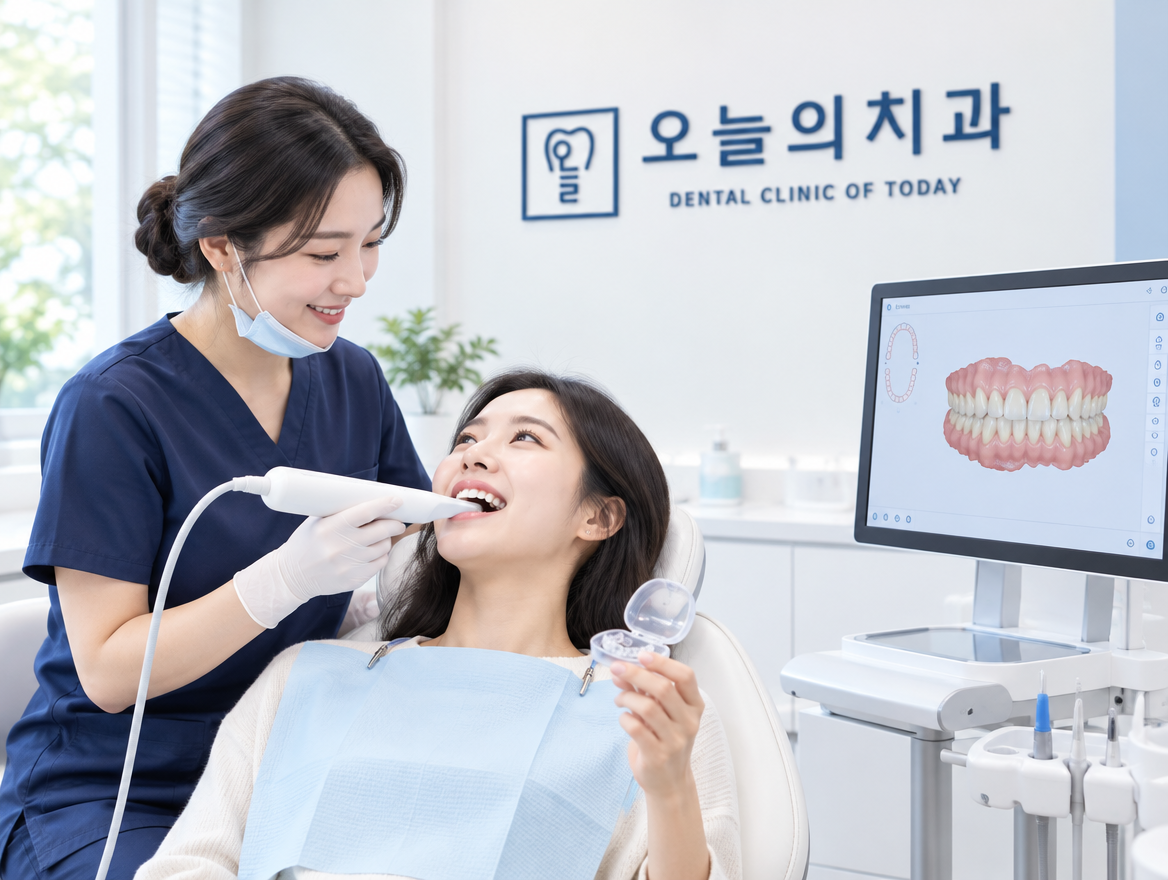
- Your starting records. The scans or impressions, photos and X-rays taken before treatment began. A panoramic X-ray and, if one was taken, a cephalometric (side-of-skull) X-ray help the dentist see roots and jaw position.
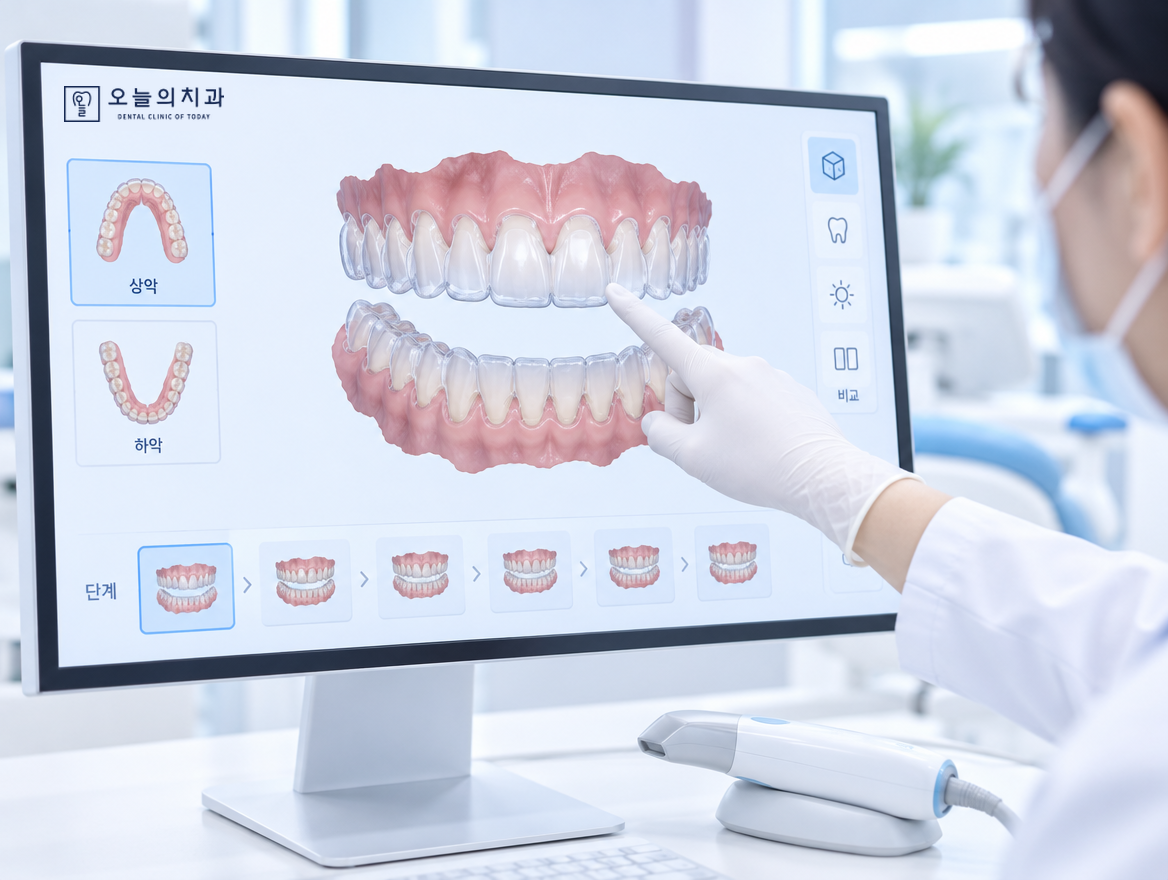
- The treatment plan. A copy or screenshots of the planned movement, the total number of stages, and which stage you are on now.
- What has been done to your teeth. Where attachments were bonded and whether any enamel was polished between teeth (often called IPR), with the amounts if they were recorded.
- Your remaining trays. Bring every unworn set in its packaging, plus the attachment template if you have it. Unworn trays may still be usable if they fit.
- A short note from your dentist. A summary of why treatment was started, how it has gone, any problems, and the planned retention afterwards.
If you are still in touch with your original practice, ask for these as digital files. Our guide to what to bring from your home dentist explains how to request records and which formats are easiest to read.
Two paths: continue the plan, or rebuild it
At the first visit the dentist compares your teeth with the records and checks how your current trays fit. The result usually points to one of two paths.
| Situation at the first visit | What usually happens next | What helps most |
|---|---|---|
| Plan can be transferred, current trays fit well | Treatment continues with your remaining trays, with check-ups in Korea | The plan itself, stage number, remaining trays |
| Plan can be transferred, trays no longer fit | A new scan is taken and the remaining movement is re-planned within the case | Starting records and a note on when the fit changed |
| Plan cannot be transferred, records are available | A new case is planned from a fresh scan, using your records as the starting point | Starting X-rays, photos, attachment and IPR details |
| Records are missing | Treatment is planned as new from a full examination in Korea | Whatever you have, even photos from the start |
When trays have to be re-made, there is a waiting period while the new set is planned, approved and manufactured. That usually takes a number of weeks, so if your stay is short, ask whether you can keep wearing your current tray in the meantime or switch to the last tray that fit.
Re-planning is not a failure. Aligner treatment often includes refinements, which are extra sets made part-way through to correct teeth that are lagging behind. A move between countries is a natural point to do that.
Fit checks you can do before you travel
You can get a rough sense of how things are going before you book anything.
- Look closely at each tray. Small gaps between the edge of the tray and a tooth, especially at the front, can mean that tooth is lagging behind the plan.
- Check that each attachment sits snugly in its pocket in the tray. A missing or loose attachment changes how the tray grips the tooth.
- Note any tray you could not wear for the full recommended time, and for how long.
Send close-up photos of the trays in place, front and side, through our photo consultation. A dentist can tell you whether it looks more like continuing or re-planning, though the final call is made in the chair.
If you started in Korea and are going home
The same logic works in reverse. If you begin aligners in Korea and then return home, plan the hand-over before your last visit:
- Ask how many stages will be given to you before you leave and how check-ins will work, for example photo reviews at set intervals.
- Take digital copies of your scans, X-rays and plan, and a note listing attachments and any enamel polishing.
- Find a local dentist who can see you for a loose attachment or a broken tray, and share the note with them.
- Agree on what happens with refinements and with retainers at the end.
Retention deserves its own plan. Teeth tend to drift after aligners unless a retainer is worn as instructed, and the retainer should be made from your final tooth position. Our article on retainers after aligners covers the options and how long they are usually worn.
Questions to ask before you travel
To your current dentist:
- Can my case be transferred to another dentist, and what does that involve?
- Can you send my starting records, plan and stage number as files?
- Have attachments been placed or enamel polished, and where?
To the dentist in Korea:
- Based on my photos and records, does continuing my plan look realistic?
- If new trays are needed, how long will they take, and what do I wear until then?
- How often will I need to come in, and can some check-ups be done by photo?
To start, send photos of your teeth with the trays in, plus any records you have, through our photo consultation. A dentist will tell you which path is likely and what else to bring. The treatment plan, the number of visits and the timing are confirmed after an examination in the clinic.
Today Dental Clinic (오늘의치과) has three locations: Gangnam Station and Cheongdam in Seoul, and Bucheon. This article was reviewed by the Today Dental Clinic dental team. It is general information about how aligner treatment can be continued between countries, not a diagnosis or a recommendation for any individual.
Questions Patients Ask
Can I continue Invisalign or other clear aligners in Korea if I started them in another country?→
Often yes, but how depends on your records and on whether your treatment plan can be transferred. If your original dentist can share the plan and your trays still fit, treatment may continue with your remaining trays. If not, the dentist in Korea usually takes a new scan and plans the remaining movement again. The path is decided after an examination.
What records should I bring to continue aligner treatment in Korea?→
Your starting scans, photos and X-rays, the treatment plan with your current stage number, details of attachments and any enamel polishing between teeth, all unworn trays, and a short note from your dentist. Digital files are easiest to read.
Will I need new aligners if I change dentists mid-treatment?→
Not always. If your current trays fit well and the plan can be transferred, you may keep using them. If they no longer fit, or the plan cannot be transferred, new aligners are planned from a fresh scan, which usually takes a number of weeks to make.
I started aligners in Korea. What happens when I go home?→
Plan the hand-over before your last visit: how many stages you take home, how check-ins will work, digital copies of your records, a local dentist for small repairs, and how refinements and retainers will be handled.
Treatment results, cost and duration may vary by patient. Final treatment plan, cost and duration are confirmed after in-clinic diagnosis.