
Porcelain veneers can involve no enamel reduction, a thin layer or more, depending on your enamel, tooth position and bite.
Porcelain veneers do not always mean heavy shaving of the teeth. Depending on the tooth, the dentist may bond a veneer with no enamel removed, remove a thin layer from the front surface, or remove more where a larger change in shape is planned. At Today Dental Clinic the choice between no-prep, minimal-prep and conventional preparation is made after the enamel, the position of each tooth, the gum line and the bite have been examined. The planned shape and shade are agreed before any tooth is touched, and the finished veneers are tried in before they are bonded. Veneer treatment there is usually completed in one to two visits, with laboratory time in between. The number of days you need in Korea is confirmed after the examination.
This article covers the part people usually ask about first: how much tooth is involved, how the design can be checked in advance, how the visits are ordered, and when veneers are not the right first step. If you are still deciding between a veneer and a crown for a particular tooth, our article on how the choice between crowns and veneers is made explains that decision.
How much tooth is removed, and what decides it
A veneer is a thin ceramic shell bonded to the front of a tooth. To place one, the dentist needs room for the ceramic so the tooth does not end up looking bulky. That room comes from one of two places: the tooth already sits a little behind where the new surface should be, or a small amount of enamel is removed.
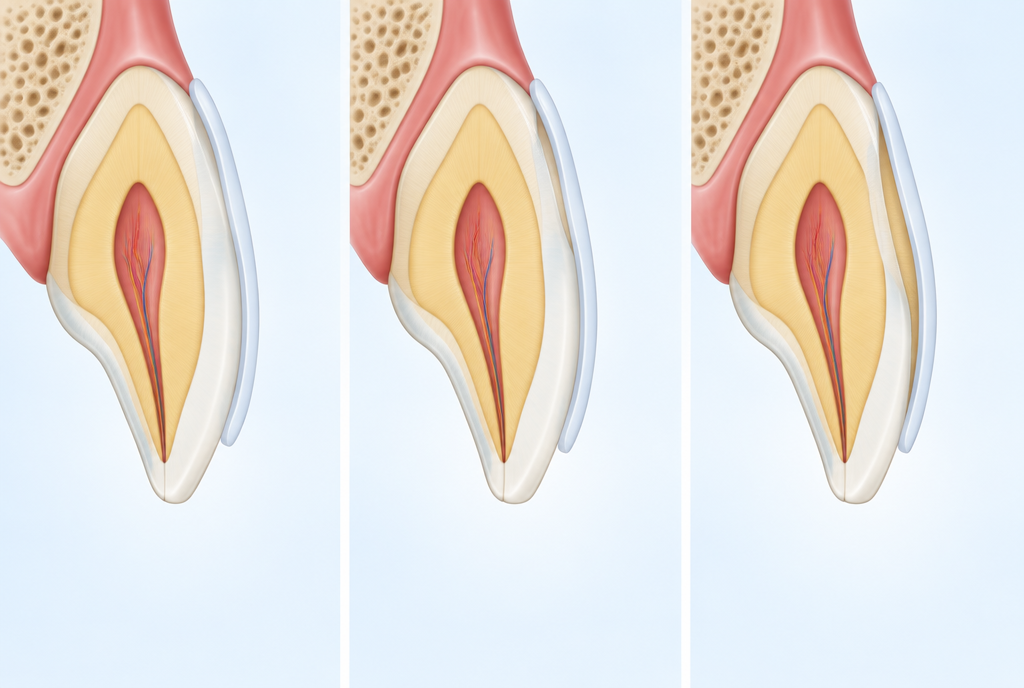
The American Dental Association describes porcelain veneer placement as removing a small amount of enamel from the front and sides of the tooth, and it points out that this makes the treatment irreversible. That is the conventional picture. In practice the amount varies from none to more, tooth by tooth.
Today Dental Clinic works with three levels:
- No-prep. The veneer is bonded onto the existing enamel without reduction. This is only possible where the tooth's position and the bite leave room for the added material.
- Minimal-prep. A thin layer of enamel is reduced first. The clinic notes that this may start at 0.1 mm and differs from tooth to tooth.
- Conventional. More enamel is reduced, sometimes including the biting edge, so that thicker ceramic fits. This tends to come up when the shape change is larger or an old restoration is being replaced.
Four readings move a case between those levels: how much enamel is left on the front surface, how far each tooth sits from the planned edge line, whether the gum line is level, and where the upper and lower teeth meet.
Enamel matters most because bonding relies on it. In a retrospective study of 580 porcelain veneers, Gurel and colleagues (2013) found that veneers bonded to dentin, or with preparation margins in dentin, failed considerably more often than veneers bonded to enamel. Keeping the preparation within enamel is one reason dentists plan the reduction carefully rather than by habit.
Less is not automatically better, though. The clinic's dentists explain that where a front tooth takes the force of the bite, a small amount of reduction can give the ceramic enough thickness to withstand it, and a veneer made too thin to avoid any reduction can be more likely to chip. The reduction follows from the planned shape and the bite, not from a preference for zero.
| What the dentist finds | Tends toward less reduction | Tends toward more reduction |
|---|---|---|
| Tooth position | Tooth sits slightly behind the planned surface, or there are small gaps | Tooth sits forward of the planned surface, or is rotated |
| Size of the change | Small change in shape, length or shade | Large change in shape, or a dark tooth that needs masking |
| Existing work | Natural tooth with intact enamel | Old filling or veneer being replaced |
| Bite | Light contact on the tooth | Heavy contact or edge-to-edge bite on that tooth |
| Enamel | Thick enamel left on the front surface | Thin or worn enamel |
The table is a general guide, not a prediction for your teeth. The level for each tooth is decided after the examination.
Seeing the design before anything is changed
Because reduced enamel does not grow back, the shape is worked out before preparation, not during it. At Today Dental Clinic three decisions are made in order: the shape (midline, smile line, edge position and the width-to-length ratio of each tooth), then the shade, then the preparation. Changing one changes the other two, so they are not decided separately. How many teeth to include is agreed at the same stage, because treating two front teeth and leaving their neighbours can make the smile line read unevenly.
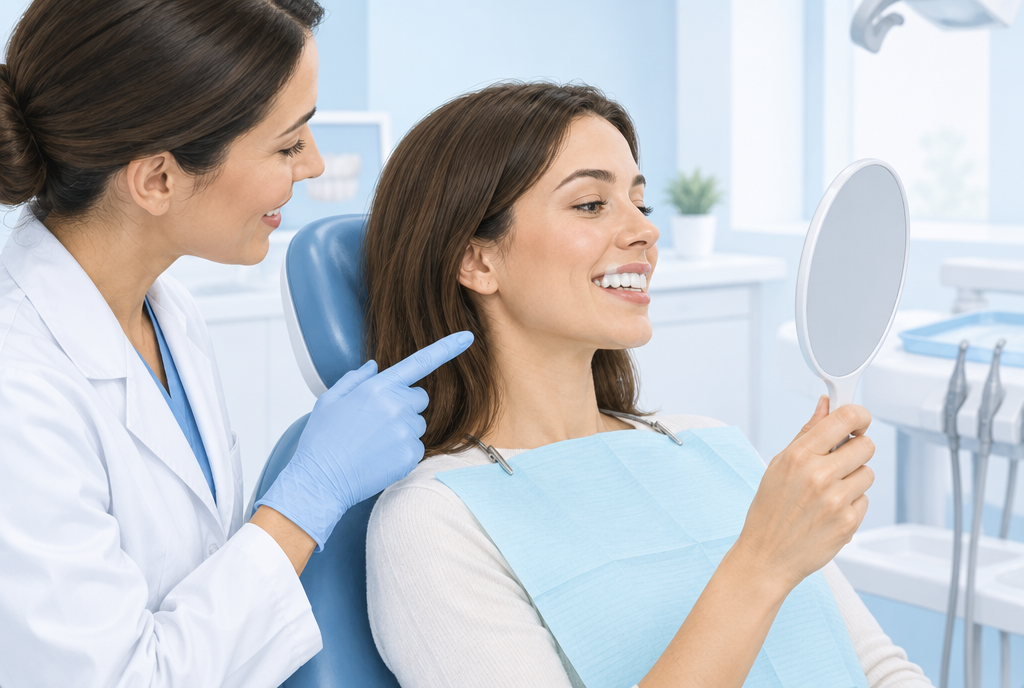
Dentists use a few tools to make that plan visible:
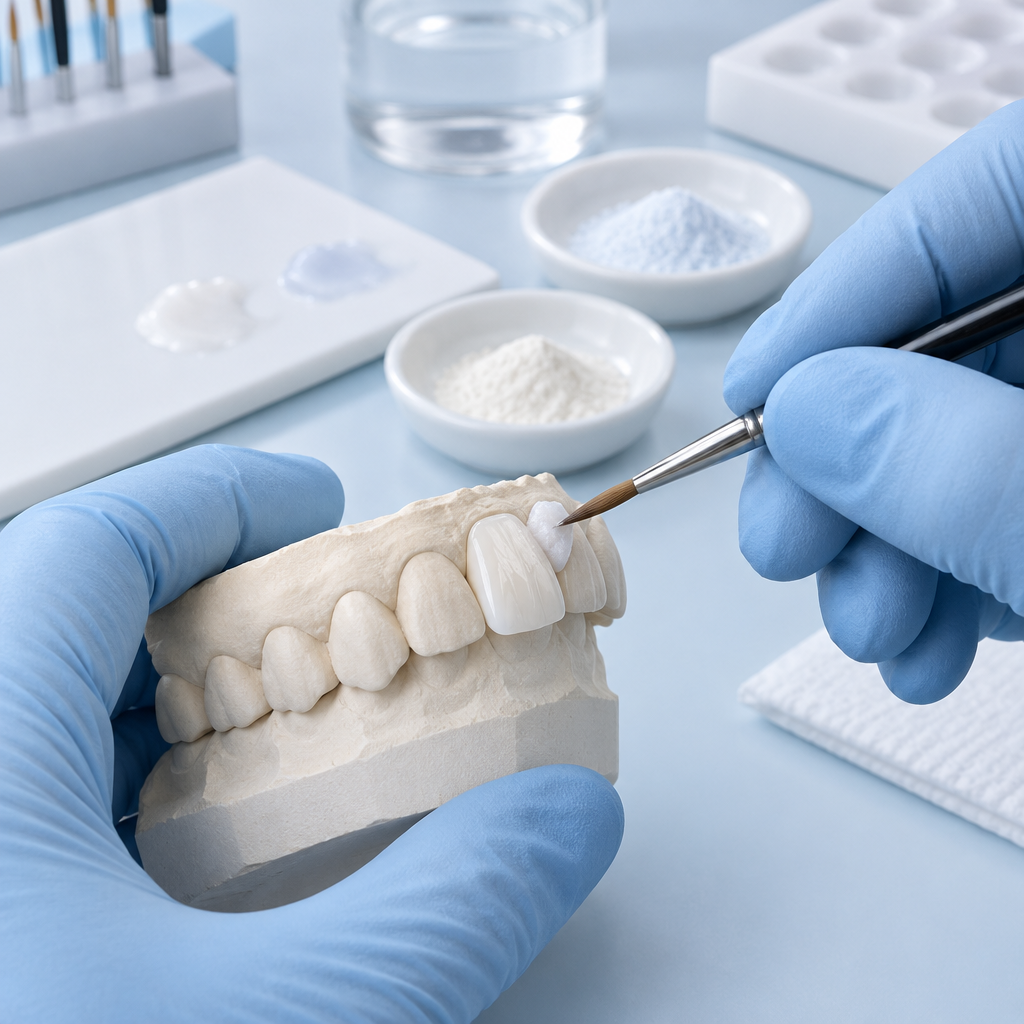
- A study model or wax-up. The planned shape is built on a model of your teeth so the dentist and the laboratory work to the same target. Today Dental's veneer page shows a study model used at the planning stage.
- A mock-up in the mouth. In general dental practice, the planned shape can be copied from the wax-up into a temporary tooth-coloured material and placed over your own teeth for a short time. You see it in your face and hear how you speak with it. Coachman and colleagues (2014) describe using this kind of mock-up to guide preparation, so that enamel is reduced only where the planned shape needs room.
- A digital simulation. In dental practice generally, a plan can also be shown as a digital preview built from photographs and scans, so the planned shape can be looked at from more than one angle before treatment. Reviews of digital smile design report better communication between patients and dentists, but they also note that the research base is still limited.
Whether your case uses a model, a mock-up in the mouth, a digital simulation or a combination is decided by the dentist. Each one is a plan to react to, not a promise of the finished result. The ceramic is layered by hand in the laboratory, and the tooth colour underneath still shows through.
When you are looking at a preview, these are worth checking:
- The length of the front edges when your lips are relaxed and when you talk.
- Whether the midline of the teeth sits where it looks natural on your face.
- How many teeth show when you smile widely, and whether the ones outside the plan will look different.
- Whether the shade matches the teeth that are not being treated.
- Whether the front teeth feel thick against your lips.
Say what you notice at this stage. Changes are easiest before preparation and still possible at the try-in, before bonding.
Visit by visit, and how it fits a trip
At Today Dental Clinic veneer treatment is usually completed in one to two visits. A typical sequence looks like this:
| Stage | What happens | What it means for your schedule |
|---|---|---|
| First visit, assessment | Enamel, tooth position, gum line and bite are examined and recorded. Shape, shade and the number of teeth are agreed | Book it early in the trip; the plan can change after the examination |
| First visit, preparation | Teeth are prepared to the agreed level. An impression or scan is taken. A temporary is fitted where the plan calls for it | Usually the same day as the assessment |
| Between visits | Each veneer is made by hand in the laboratory to the recorded shape and shade | The fabrication schedule is planned in advance |
| Second visit, fitting | Veneers are tried in so the shape can still be corrected, then bonded. The bite is checked again | Leave a little time after this visit for bite adjustments |
| Treatment first, if needed | A cavity or gum problem found at the examination is treated before the veneer stage | The veneer stage moves later |
Whether you wear temporaries between visits depends on how much was prepared. In some minimal-prep cases the teeth look close to their usual appearance without one.
Two things lengthen the plan more often than people expect. The first is treatment that has to come before veneers, such as a cavity under an old filling or inflamed gums. The second is whitening. If the neighbouring teeth are going to be whitened, the veneer shade is usually matched afterwards. The clinic's dentists explain that tooth colour drifts back for about two weeks after whitening, so they prefer to match the ceramic once the colour has settled. If whitening is part of your plan, ask at the consultation where it fits in the timeline. Our teeth whitening page explains how it is approached.
After bonding, small bite adjustments are normal once you have chewed on the new surfaces. The ADA also advises telling your dentist if your bite does not feel right after placement. A free day before your flight leaves room for that check if it is suggested.
When veneers are not the right first step
Veneers suit some situations better than others. These are the cases where a dentist is likely to suggest something else first, or instead:
- Decay or gum disease. The ADA states that these have to be treated before veneers, and that placing veneers over unhealthy teeth may make existing problems worse.
- Teeth that are out of line rather than out of shape. If fitting a veneer to a crooked tooth would mean removing too much enamel, the clinic's page says orthodontic treatment should be considered. Sometimes the answer is short orthodontic treatment followed by veneers on fewer teeth.
- Heavy grinding, clenching or a deep overbite. The ADA notes that veneers may not be a good choice in these cases. At the clinic, grinding wear is checked at the examination and a night guard is discussed when it is found.
- A tooth that has lost a lot of structure. A heavily filled, cracked or root-treated tooth may need a crown, which covers the whole tooth.
- Discolouration that might respond to whitening. The clinic checks whitening first when that could be enough.
- Healthy teeth, purely for appearance. Today Dental Clinic states that treating healthy teeth for purely cosmetic reasons can lead to side effects, which is why the consultation reviews your goals, the risks and any tooth structure that would be removed before veneers are recommended.
None of these rule veneers out automatically. They change the order, the number of teeth or the method.
What affects how long veneers last
No dentist can give you a fixed lifespan, and the clinic does not promise one. What can be said is which factors matter.
A meta-analysis of glass-ceramic and porcelain veneers (Morimoto and colleagues, 2016) found fracture or chipping to be the most common complication. Debonding, new decay at the edge and marginal staining were reported less often. The Gurel study points the same way from another angle: veneers bonded to enamel held up better than those bonded to dentin.
In daily life, the main factors are the bite and habits such as grinding or biting hard objects, cleaning along the margin where the veneer meets the tooth (the ADA notes that you can still get cavities under or around a veneer), and regular check-ups with a dentist who knows which teeth carry veneers. Our article on living with veneers goes through the years after placement in more detail.
Before you book: what to send and what to ask
Useful photos to send before you travel:
- Your smile from the front, relaxed and wide, in daylight.
- The same from each side.
- A close-up of the front teeth with your lips pulled back and the teeth slightly apart.
Also tell us whether the teeth in question have fillings, crowns or veneers already, whether you grind your teeth, whether you have whitened before, and your travel dates. Recent X-rays from your home dentist help.
Questions worth asking at the consultation:
- Which preparation level is likely for each tooth, and why?
- How will I see the planned shape before my teeth are prepared?
- How many teeth would need to be included for the smile to look even?
- Does anything need treating first, and how does that change the days I need?
- Should whitening come before the veneers in my case?
To start, send your photos and travel dates through our photo consultation. A dentist will tell you what can be seen from the photos, what cannot, and how a visit would likely be structured. You can read more on our veneers page and our no-prep veneers page. Whether veneers suit your teeth, the preparation level and the number of days are confirmed after the examination in the clinic.
Today Dental Clinic (오늘의치과) has three locations: Gangnam Station and Cheongdam in Seoul, and Bucheon. Veneer cases are planned by a team that includes board-certified specialists in Integrated Dentistry, and a plan that involves gums, bite and restorations is discussed by the specialists in each field. Specialists rotate between the branches, so the branch for your visit is confirmed when the appointment is arranged. This article was written from Today Dental Clinic's published information and the dentists' explanations. It is general information about porcelain veneers, not a diagnosis or a recommendation for any individual.
Questions Patients Ask
Do veneers in Korea always require shaving the teeth?→
No. At Today Dental Clinic the dentist chooses between no-prep (no enamel removed), minimal-prep (a thin layer, which may start at 0.1 mm and varies by tooth) and conventional preparation. The choice depends on your enamel, the position of each tooth, the gum line and the bite, and it is made after an examination. Where enamel is reduced, it does not grow back.
Can I see what my veneers will look like before my teeth are prepared?→
The shape, shade and number of teeth are agreed before any tooth is touched. Depending on the case, the plan can be shown on a study model, as a temporary mock-up over your own teeth, or as a digital simulation built from photographs and scans. The finished veneers are also tried in before bonding, so the shape can still be corrected. A preview is a plan to react to, not a promise of the final result.
How many visits and days do veneers take in Korea?→
At Today Dental Clinic veneer treatment is usually completed in one to two visits: assessment and preparation, then a fitting visit after the laboratory has made the veneers. The minimum stay depends on tooth condition, the preparation needed and fabrication, and is confirmed after the examination. Treatment that has to come first, such as a cavity or gum problem, or whitening before the shade is matched, can lengthen the plan.
Can veneers be used instead of braces for crooked teeth?→
Sometimes, for small irregularities. If fitting a veneer to a crooked tooth would mean removing too much enamel, orthodontic treatment should be considered first, and sometimes a short orthodontic stage followed by veneers on fewer teeth is the more conservative route. The dentist explains the options after examining your teeth and bite.
Are no-prep veneers always the better choice?→
Not always. No-prep veneers keep the enamel, but they only work where the tooth position and bite leave room for the added material. If a tooth takes heavy force when you bite, a small amount of reduction can give the ceramic enough thickness, while a veneer made too thin can be more likely to chip. The level is chosen for each tooth.
Will I need temporary veneers between visits?→
It depends on how much was prepared. A temporary is fitted where the plan calls for it. In some minimal-prep cases the teeth look close to their usual appearance without one. The dentist will tell you which applies before preparation.
Treatment results, cost and duration may vary by patient. Final treatment plan, cost and duration are confirmed after in-clinic diagnosis.